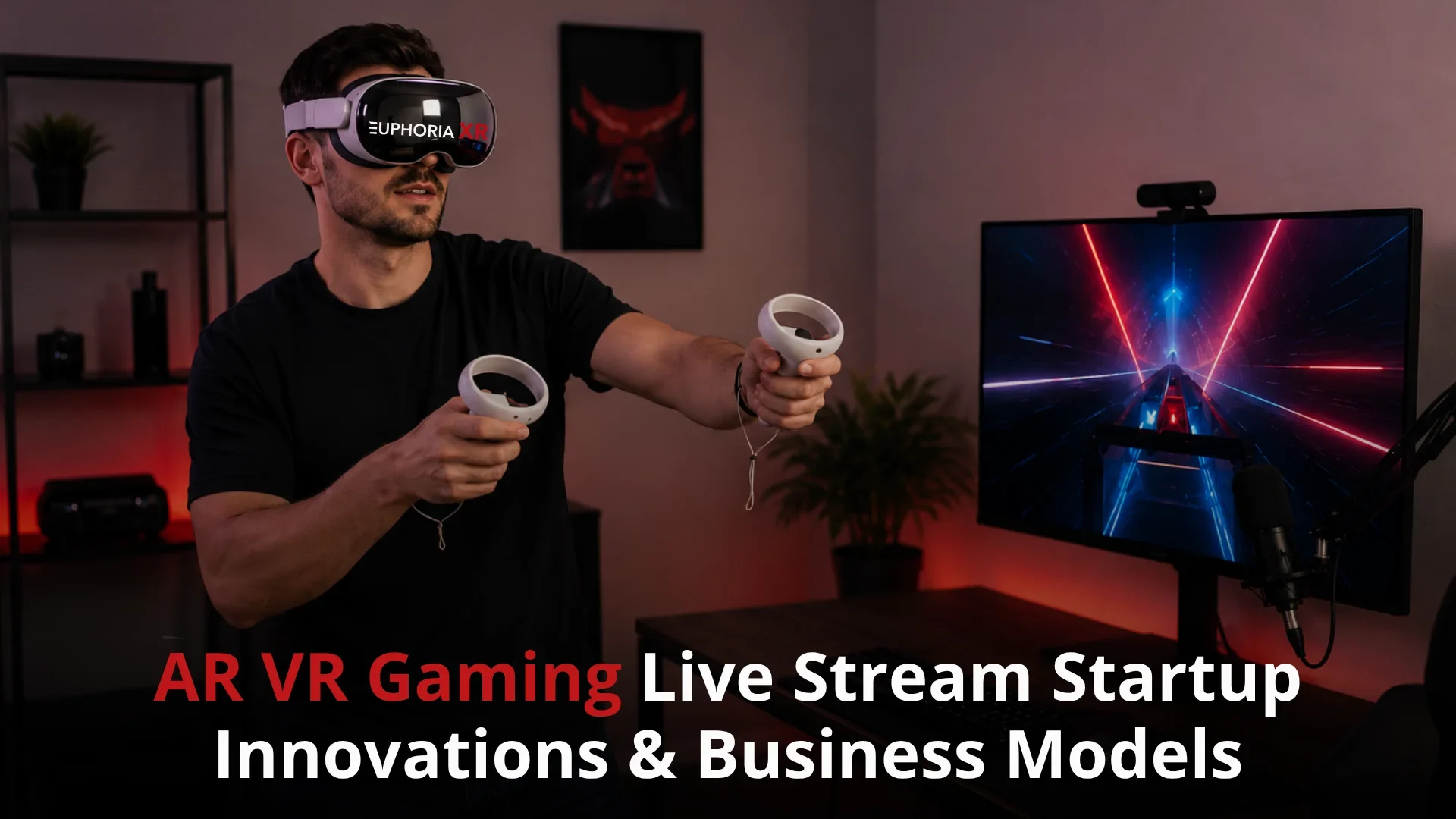

Why AR VR Gaming Live Streaming Is Becoming a Startup Opportunity?
The AR VR gaming live streaming is rising due to the fact that gamers are already aware of virtual worlds, avatars, skins, online communities, virtual items, and so on.
Live streaming is also an integral aspect of gaming culture. Daily playback, esports, creator streams, walkthroughs, and game launches.
This behavior is enhanced with AR and VR. They create a more interactive, social, and valuable experience for creators, brands, and game studios in streams.
This provides start-up possibilities around:
Virtual tickets
Subscriptions
Digital goods
Brand sponsorships
Immersive ads
Creator tools
B2B platforms
Gaming Audiences Want More Interactive Experiences
Gamers don’t want to just watch. They desire to participate in, respond to, adapt, compete, and belong to the group.
This can be helped by AR and VR, which enable the viewer to:
Participate in virtual watch parties.
Appear as avatars
Observe games from various angles
Trigger AR effects during streams
Enter branded gaming spaces
Purchase online products at live events
Attend creator meetups
This helps the stream make a more immersive experience than a video.
XR Is Expanding Beyond Headsets
XR does not just have to be VR headsets.
It now includes:
VR headsets
Mobile AR apps
Mixed reality devices
WebXR experiences
Desktop 3D platforms
Smart glasses
Spatial computing devices
This is important since not all users have a headset. An excellent AR VR gaming live streaming platform must be able to support a number of gadgets.
This is best achieved using cross-device access. Users can access via mobile, desktop, web, AR, or VR, as they require.
Startups Can Combine Gaming, Streaming, Social, and Commerce
The biggest opportunity is that AR VR gaming live streaming brings together various business models.
A startup can be a combination of:
Gaming content
Creator communities
Live events
Social interaction
Digital goods
Virtual merchandise
Brand activations
Immersive advertising
Paid access
B2B licensing
This will help start-ups generate income from a variety of other sources besides ads.
A platform could sell virtual tickets, sell creator subscriptions, charge brands for brand sponsorships, and license technology to game studios, to name just a few examples.
Key Innovations in AR, VR, Gaming, and Live Streaming
Enhanced active and immersive entertainment experiences via AR, VR, gaming, and live streaming.
The most important innovations are below.
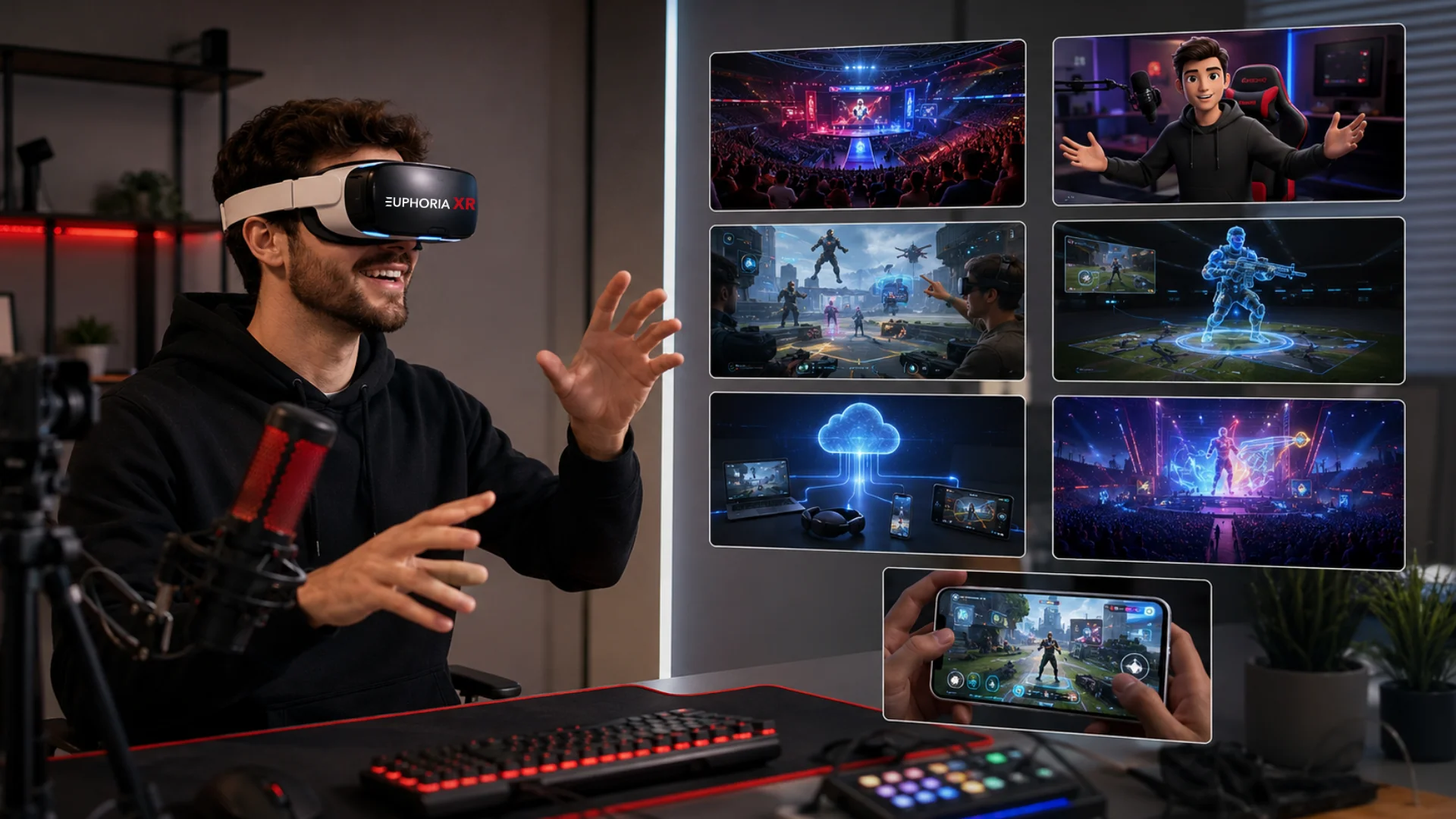
Immersive Esports Arenas
The immersive esports arena enables fans to participate in tournaments as if they were taking place in a virtual environment.
Fans can not only watch a video stream, but they can get into a 3D arena, sit amongst other viewers, utilize avatars, watch live stats, and gain access to premium camera angles.
Useful features include:
Virtual stadium seating
Team fan zones
VIP rooms
Sponsor lounges
Real-time stats
3D replays
Digital merchandise booths
This can generate revenues in the form of tickets, sponsorship, premium entry, and virtual merchandise.
Avatar-Based Streaming
With Avatar Streaming, creators can stream as avatars rather than with a regular camera.
This provides the creators greater control over privacy, brand, and presentation. It also enables them to build up a stronger digital identity.
These are some of the possibilities of how it can be made revenue:
Avatar skins
Digital gifts
Branded outfits
Paid creator rooms
Virtual meetups
Fan memberships
With this type of model, you can transform a streamer into a full entertainment brand on digital platforms.
Mixed Reality Game Broadcasts
The Mixed Reality game broadcasts combine real-world video with virtual elements.
One of the streamer’s rooms can become a game world. Virtual objects can be displayed in the form of pictures on the screen. Spectators can start to see the effects. Brands can have digital products in the stream.
This is suitable for:
Game launch streams
Creator events
Product reveals
Branded gaming campaigns
Tournament broadcasts
Interactive overlays
Increases the engagement and impact of live gaming content.
3D and Volumetric Replays
Designed for key moments in a game, 3D Replays and the 3D versions of these Replays provide different viewpoints on the game.
This is useful for esports, competitive gaming, and the analysis of games.
It assists the viewer to comprehend:
Player movement
Team strategy
Key mistakes
Winning plays
Tactical decisions
Match highlights
This can be a product for esports teams, broadcasters, premium fans, and coaches.
Cloud-Based XR Streaming
Cloud-based XR streaming means that users can go into immersive experiences without having to use a very high-performance computer or device.
Many processes are done in the cloud. Then, this experience is broadcast to the user’s device.
Benefits include:
Less hardware pressure
Easier access
Faster updates
Better scalability
Cross-device support
Smoother event management
Useful for virtual events and immersive gaming platforms, branded experiences, and multiplayer XR experiences.
Virtual Concerts and Gaming Events
The gaming site is transforming into a digital amusement center.
With AR and VR, virtual concerts, fan meet-ups, game launches, and digital festivals, as well as creator-led events, are possible.
Examples include:
Have live music within game environments
Artist/creator meet and greets.
Game trailer reveals
Branded challenges
Virtual afterparties
Fan competitions
Tickets, sponsors, digital items, and premium access are all avenues for monetization of these events.
AR Layers for Mobile Gaming Streams
The AR layers are used to create immersive aspects of games using mobile devices.
This will be helpful as many users don’t have VR headsets but have smartphones.
Elements of an AR layer can be:
AR filters
Interactive effects
QR-based experiences
Branded AR objects
Real-world mini games
Social sharing effects
Unlockable digital items
Mobile AR is a more practical way of entry for startups as it is easily accessible and can be more widespread.
Business Models for AR VR Gaming Live Stream Startups
There’s more to a successful AR VR gaming live stream than an exciting idea. In addition, it must also have an obvious route to profitability. The best models are typically a mix of all of these four revenue streams: user payments, creator monetization, brand partnerships, and B2B revenue.
Subscription-Based Access
A subscription model is viable if users are paying premium amounts monthly or annually to enjoy the immersive experience. This may include high-quality VR watch rooms, creator-specific spaces, ad-free VR streams, access to virtual events before they happen, high-quality virtual items, private fan groups, and advanced replay options.
This model is best suited if there is some reason for people to return to your site again and again. Engaging content and events, active creators, and new digital items can contribute to better retention.
Pay-Per-Event Virtual Tickets
Pay-per-event tickets come in handy for unique gaming events. Users have a single payment, not a monthly fee, and pay to attend a certain event.
It’s suitable for the following events: Esports Finals, Game Launch, Creator Meetup, Virtual Concerts, Premium Watch Party, and Gaming Events sponsored by brands. Easy for users to comprehend, as they are aware of what they are paying for.
This can be beneficial for startups as it can be used to create revenue at high-demand times.
Creator Revenue Sharing
Streamers and gaming creators can profit from the platform through Creator revenue sharing. The startup then keeps a percentage of those revenues.
Creators have the opportunity to make money from paid rooms, fan tips, digital gifts, subscriptions, private events, branded streams, and avatar items. This model is an easy way to make a model that can grow rapidly (due to the creators’ own audiences). The startup supplies tools, and creators help to boost traffic, involvement, and income.
Brand Sponsorships and Immersive Advertising
AR VR gaming live stream startups are supported by one of the best business models and brand sponsorship.
Brands are looking to engage with gamers in a natural and engaging way. By immersing the brand within the experience, they can help the brand transcend the limitations of traditional ads. With AR and VR, the brand can be part of the experience, going beyond the limitations of traditional ads.
Virtual arenas, digital billboards, AR effects, avatar outfits, fan lounges, branded challenges, product demo rooms, or in-stream virtual objects are among the many ideas a brand can sponsor.
The secret of making advertising useful: make it seem natural. Users are more likely to accept the sponsorship if the stream gets enhanced by the sponsorship.
Digital Goods and Virtual Merchandise
Gamers are familiar with digital items. Purchase skins, badges, emotes, and collectibles within games.
AR VR gaming live stream startups can sell outfits or skins, gaming stream badges, digital collectibles, virtual room items, creator-branded outfits, team merchandise, event-exclusive items, and limited-edition rewards.
It is an effective model when used at live events, as their attention is already captured and they are enthusiastic.
B2B White-Label Platforms
Another aspect of a B2B white-label platform is that other companies can leverage the startup’s technology as their own.
They are an excellent choice for startups looking to get a constant supply of business income rather than from consumers. Potential clients can be game studios, esports teams, event agencies, entertainment brands, media, sports broadcasters, and training companies.
The startup may charge for the platform access, platform setup, customization, hosting, support, analytics, and ongoing platform access.
Licensing XR Streaming Technology
Some startup companies might not require the development of an entire consumer platform. They are able to sell their XR streaming technology to other companies.
These may range from avatar systems to AR overlay engines, 3D replay systems, spatial audio systems, virtual venue frameworks, multiplayer event infrastructure, and real-time interaction tools.
The best application of this model is when the start-up has a strong technology that other platforms are looking for.
Marketplace Model
Content creators, developers, designers, and brands can purchase and sell digital assets for live streaming games in this marketplace model.
Marketplace products can be anything from 3D environments, avatar items, AR filters, VR room templates, stream overlays, virtual event kits, or interactive objects. The startup receives a cut of every sale for its services.
The best model is where there is an active market of creators as well as buyers.
Most Promising AR VR Gaming Live Stream Startup Ideas
The most successful start-up concepts in this area are directed. They provide a clear solution to one of the problems for gamers, creators, brands, or esports teams.
VR Esports Watch Party Platform
The VR esports watch party platform allows fans to watch the tournaments together in a virtual room.
Rather than watching from a distance, fans can enter into a 3D environment and become avatars on-screen with other fans watching the match as if it were happening in real time. Virtual stadium, team fan areas, live match screens, voice chat, VIP rooms, sponsor areas, and 3D replay access are all examples of features that can be incorporated into the platform.
The best ways to generate revenue with this startup idea include ticket sales, subscriptions, sponsoring, and virtual goods.
AR Livestream Overlay Tool for Streamers
An AR livestream overlay tool enables the streamer to add visual effects that have interactive elements to their stream.
This can help increase the interest that streams can provide without the need for VR headsets. The tool can feature AR effects, branded overlays, animated effects that are triggered by the viewer, game scenes, product placement, and creator templates.
The concept is good for a SaaS solution. The tool can be used monthly for a fee by streamers, agencies, and brands.
Avatar-Based Gaming Creator Platform
An avatar-based gaming creation stage makes it possible for streamers to construct material as virtual figures.
This is beneficial for creators who are seeking privacy, more brand identity, or a more distinctive visual identity. It can feature 3D avatar creation, virtual rooms, fan avatars, digital gifts, paid meetups, creator merchandise, and brand tools.
This model can make money via creator memberships, revenue sharing, digital goods, and top-tier tools.
Immersive Game Launch Event Platform
An immersive game launch event platform helps game studios launch new games in a more interactive manner.
Rather than simply displaying a trailer, studios can have fans peer into a virtual world where they can explore, watch, interact, and unlock rewards. This can be virtual reveal rooms, game demo areas, developer Q&A areas, trailer viewing areas, digital collectibles, fan challenges, and brand sponsor areas.
This concept can be very effective for B2B services, like game studios, game publishers, and entertainment brands.
Mixed Reality Gaming Broadcast Studio
A mixed reality gaming broadcast studio is an environment designed to enable creators and brands to broadcast their games with a mix of real and virtual content.
This can make gaming material look more created and soothing to remember. The studio can be used for mixed reality scene design, AR overlays, virtual sets, live broadcast effects, branded product placement, and fan interaction triggers, as well as event production support.
This concept applies to a service business or SaaS platform, or a hybrid model.
Virtual Gaming Arena for Brands
A virtual gaming arena provides the brands with a complete immersive environment to observe, play, explore, and interact.
It’s more than just an ad as it involves the brand as part of the experience. A virtual arena can be used for a brand’s esports sponsor lounge, product demo area, a branded mini-game, fan challenge room, digital merchandise area, or interactive launch events.
This model also has the potential to earn revenue from campaign build fees, sponsorships, maintenance retainers, and analytics reporting.
3D Replay and Match Analysis Platform
A 3D replay and match analysis platform, which can be used by viewers, coaches, and esports teams to watch the game from various perspectives.
This is useful for competitive games, as players can gain insight into their opponents’ play, tactics, misplays, and winning plays. The platform can feature 3D match replays, multiple viewing angles, player tracking, tactical analysis, coach reviews, and high-end fan replay rooms.
The SaaS subscription model, along with licensing and tournament partnerships, can generate revenue for this startup idea, as well as access to the premium tier for fans.
How to Build a Sustainable AR VR Gaming Live Stream Business Model?
When building a business model for AR VR gaming live streams, it is not just about creating a fun immersive experience; it’s also about building a sustainable business model. The platform should address one clear problem, be device independent, generate revenue from more than one audience, and provide a reason for the user to come back.
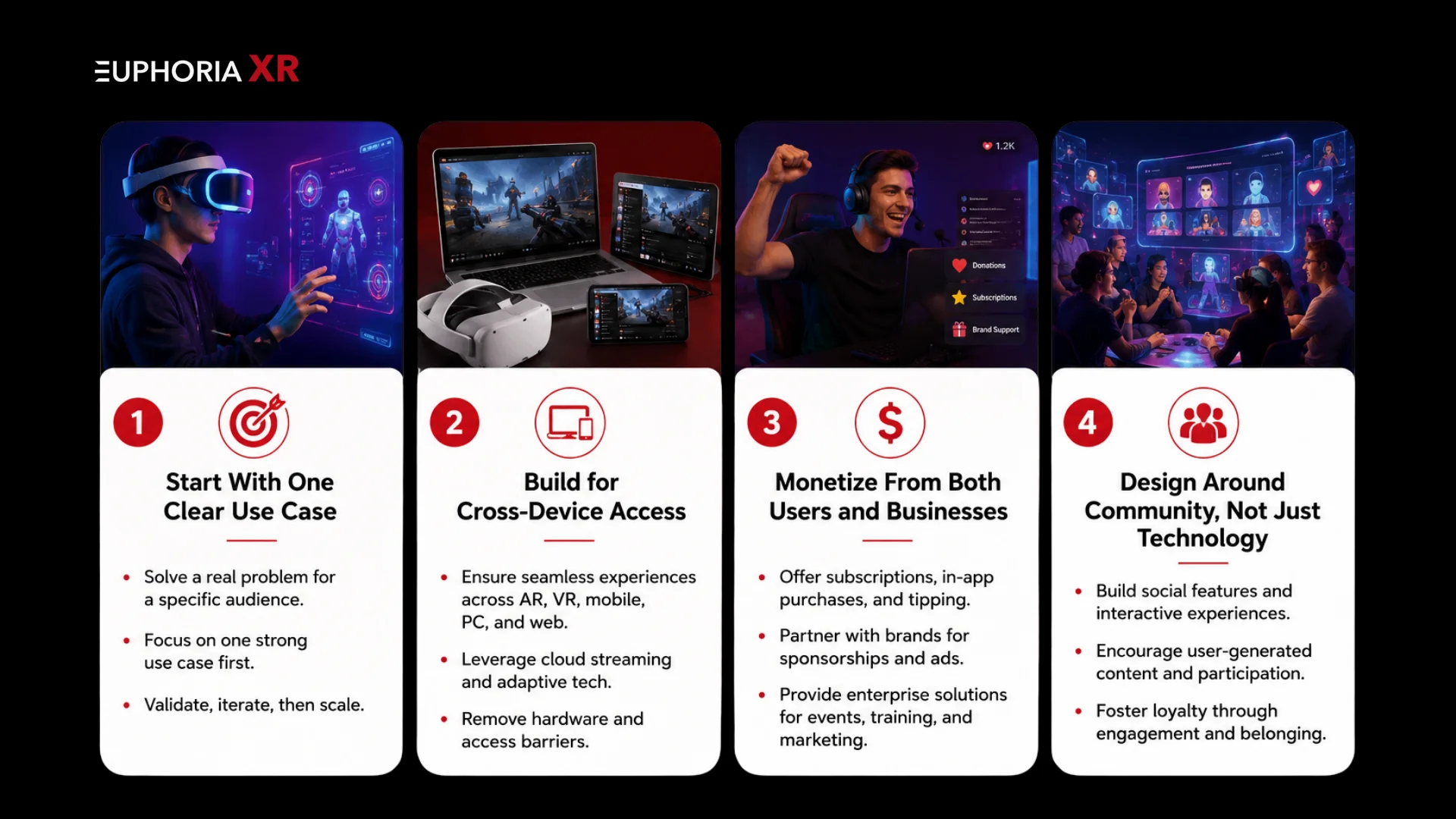
Usability, monetization, and community should be at the core of a strong model.
Start With One Clear Use Case
Startups mustn’t follow the path of creating an extensive immersive platform right from the start. Start with one well-defined use case, which can be explained and is easier to test.
Initial good sites to work from are:
Watch parties for VR Gaming events.
Streamers will have AR overlays to use. There’ll be AR overlays for streamers.
Avatar-based creator rooms
Events that introduce a game.Events that are used to launch a game.
Players can broadcast their games to the rest of the world using mixed reality.
The tools used for 3D replay and analysis of matches.
With the first use case successful, the startup can branch out to other features, types of content, and revenue-generating methods.
Build for Cross-Device Access
The best AR VR Gaming Live Streaming platforms should not be solely based on VR headsets. Not all users have them, so they should be available to multiple devices.
The platform can be used to support:
VR Headsets for complete immersion.
It’s time to use mobile phones for AR access.
A video that is designed to be displayed on a desktop computer.A desktop video.
The browser for easy entry of web browsers.
The mixed reality advanced experiences are available on mixed reality devices.
Large screen, for viewing events, or smart TVs.
Cross-device access increases access to more users and decreases friction. It’s more likely for people to join if they can use the device they already own.
Monetize From Both Users and Businesses
No one source of revenue should be the basis of a sustainable business model. Both the gamers and companies can benefit from the best AR VR games live stream startups.
Some of the revenue that can be generated from the user side includes:
Virtual tickets
Premium subscriptions
Avatar items
Digital collectibles
Paid creator rooms
VIP access
Event-exclusive rewards
The following are examples of different types of business-side revenue:
Brand sponsorships
Immersive advertising
Custom virtual events
White-label platforms
XR technology licensing
Branded gaming arenas
Data analysis and reporting tools.
This helps to provide a larger income stream. Purchasing access is a way for fans to gain access, whereas brands, creators, game studios, and esports teams pay for enhanced business value.
Design Around Community, Not Just Technology
It’s tech that gets people to pay attention to you, and it’s the community that makes them want your attention. Users feel a connection to creators, teams, games, and other users in gaming live streaming; this is what makes it work.
A good immersive platform ought to have the following features:
Avatar-based fan rooms
Live watch parties
Creator meetups
Team fan zones
Real-time reactions
Digital rewards
Shared virtual events
Communicating via voice and through social communication.
The target is to display to the users a 3D space. What you’re looking to do is to get them to feel like they are part of it. If the user feels like a part of a community, he or she will more likely return, subscribe, purchase the digital items, and come to the events again.
Where EuphoriaXR Fits Into This Opportunity?
With the help of EuphoriaXR, gaming startups, entertainment brands, and online businesses can bring their immersive ideas to life and create true AR/VR/Mixed Reality products. Having an AR VR gaming live stream concept is not enough for an AR VR gaming live stream startup. Product must have a clear concept to launch process, cross-device planning, and smooth performance, along with a strong design.
EuphoriaXR is an award-winning AR and VR development firm based in the USA, which can assist businesses with:
Create AR VR gaming prototypes. Build AR VR gaming prototypes.
Immersive livestream environments
Virtual event spaces
Mixed reality broadcasts
3D interactive worlds
WebXR applications
AI-powered XR solutions
Use the world’s largest library of custom XR experiences with Meta Quest, Apple Vision Pro, Android XR, Varjo, PICO, and more.
Whether it’s a proof of concept or a full-fledged immersive platform, EuphoriaXR can set the direction, select the appropriate technologies, create the experience, and bring an idea, concept, or platform to life.
Challenges AR VR Gaming Live Stream Startups Must Solve
The AR VR gaming live stream startups have immense potential; however, they are also facing some challenges. Simply having a good idea isn’t good enough. It should be accessible, inexpensive to manufacture, user-friendly, and profitable in terms of the business model.
Hardware Adoption
Not all users have VR headsets or Mixed Reality devices. This may restrict an audience when it is only accessible via a headset.
The solution for the startups to this problem is to provide:
A complete VR experience for VR headset users
A mobile version for access by a wider audience.
A game version for the desktop game.
A web-based version that is easy to enter.
Smartphone users will be able to utilize the AR capabilities.
The more streamlined the process is to join, the quicker the platform will be able to grow.
Cross-Platform Access
There are several devices that the gaming audience uses. There are some watch streams on phones. Some use gaming PCs. Some use consoles, tablets, smart TVs, and/or VR headsets.
The best AR VR gaming live stream platform should offer various access points.
This helps with:
Larger audience reach
Easier user onboarding
Better event attendance
More flexible brand campaigns and strategies.
Stronger creator adoption
Real Users have more practical experiences of the cross-platform access.
Content Production Cost
Creating the content in a way that is truly immersive can be expensive. 3D assets, virtual environments, avatars, animations, real-time streaming systems, multiplayer capabilities, and robust backend support are some of the requirements that startups might require.
Start-ups should have only one product and gradually expand their product line with time to control costs.
A good place to start is:
AR livestream overlays
Virtual watch rooms
Avatar-based creator spaces
Environmental graphics for simple branded gaming areas.
3D replay tools
WebXR event demos
This helps to limit development scope and testability.
User Retention
It’s all right to get users to experience something once, but it is not enough. It is the actual problem that they come back.
High community engagement, new content & videos, and transparent rewards are the key to keeping users.
There are ways for startups to boost retention, which include:
Regular live events
Creator-led experiences
Fan rewards
Digital collectibles
Seasonal content
Team-based communities
Private rooms
Exclusive access
The platform should come alive and not be considered a one-time demo.
Monetization Balance
For AR/VR gaming live-stream startups, revenue is a necessity, but they shouldn’t compromise the experience.
A high number of ads will cause users to leave. Being overloaded with paid features can lead to the platform’s closure. The most natural model is the best.
Here are some great monetization options:
Virtual tickets will be on offer for special events.
Premium subscriptions
Digital goods
Brand-sponsored spaces
Creator revenue sharing
B2B licensing
White-label platforms
The aim is to put monetization in value, not obligation.