
What is VR in Healthcare

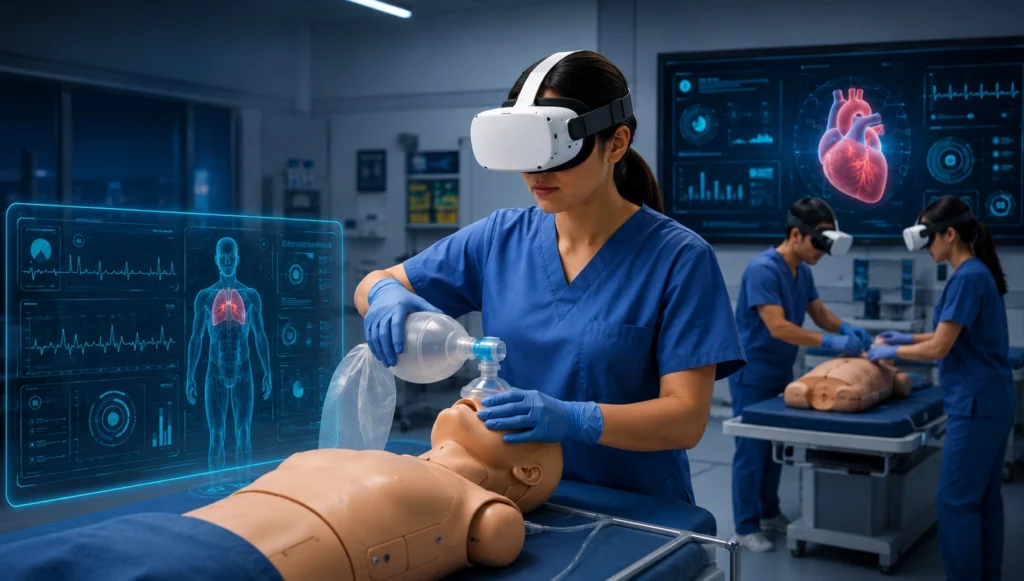
Medical Simulation Training

Therapy & Mental Wellness

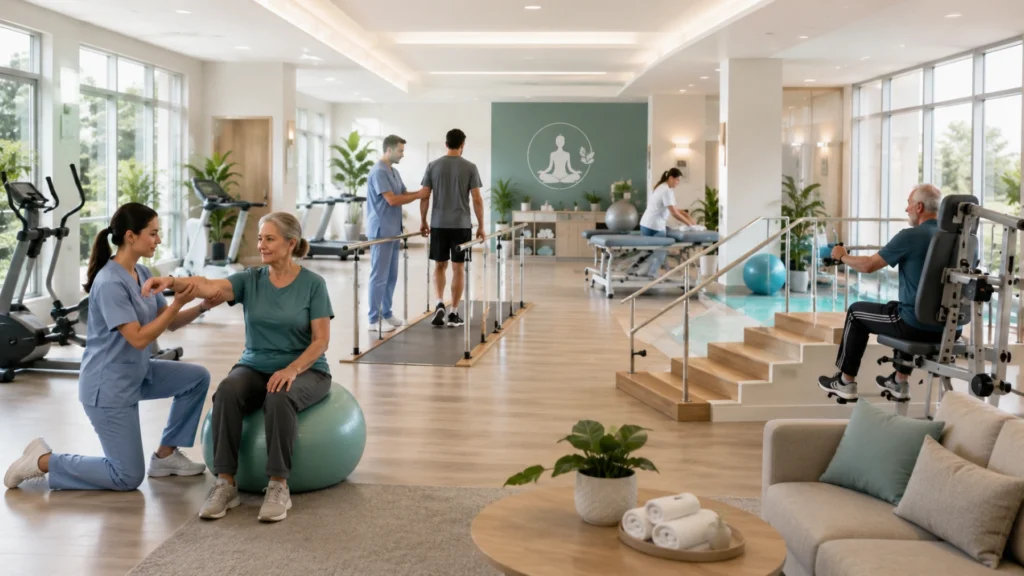
Rehabilitation Programs

What is AR in Healthcare

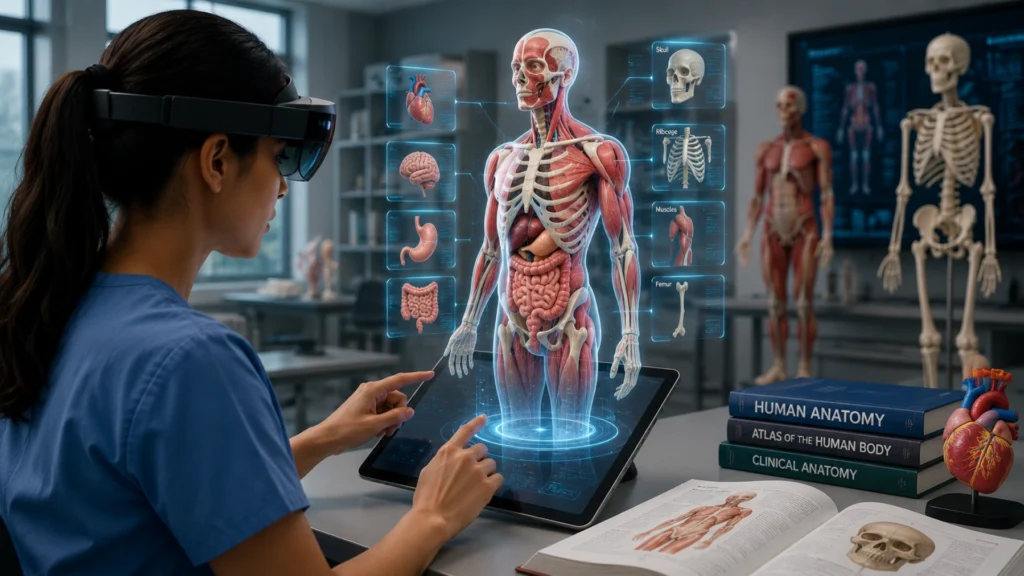
Anatomy Visualization

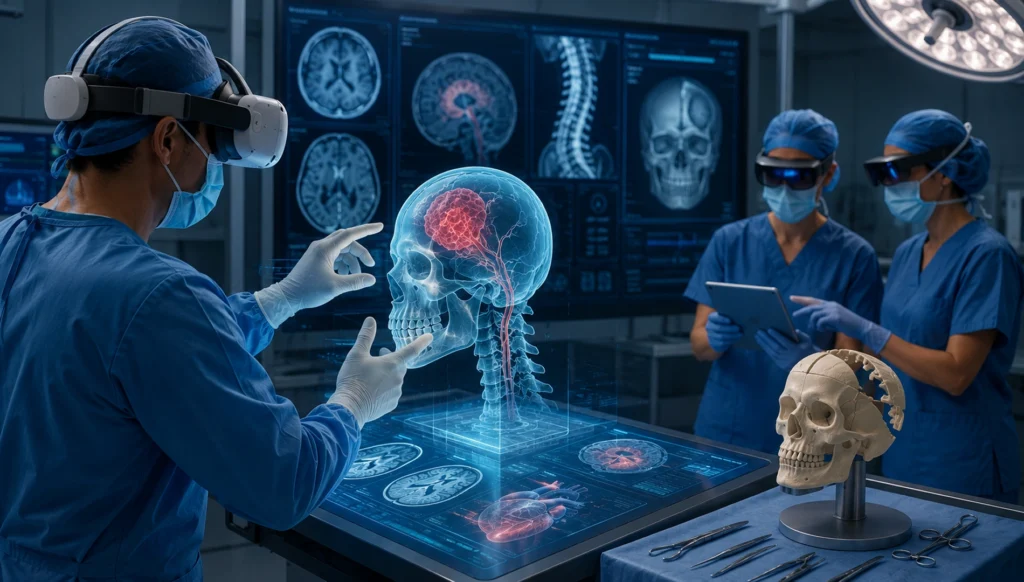
Surgical Guidance

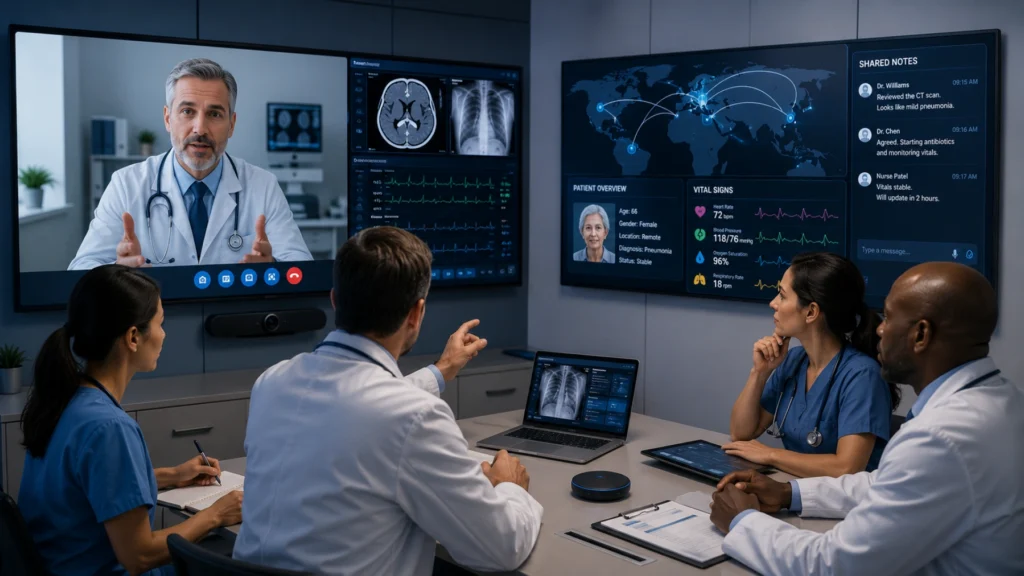
Remote Assistance
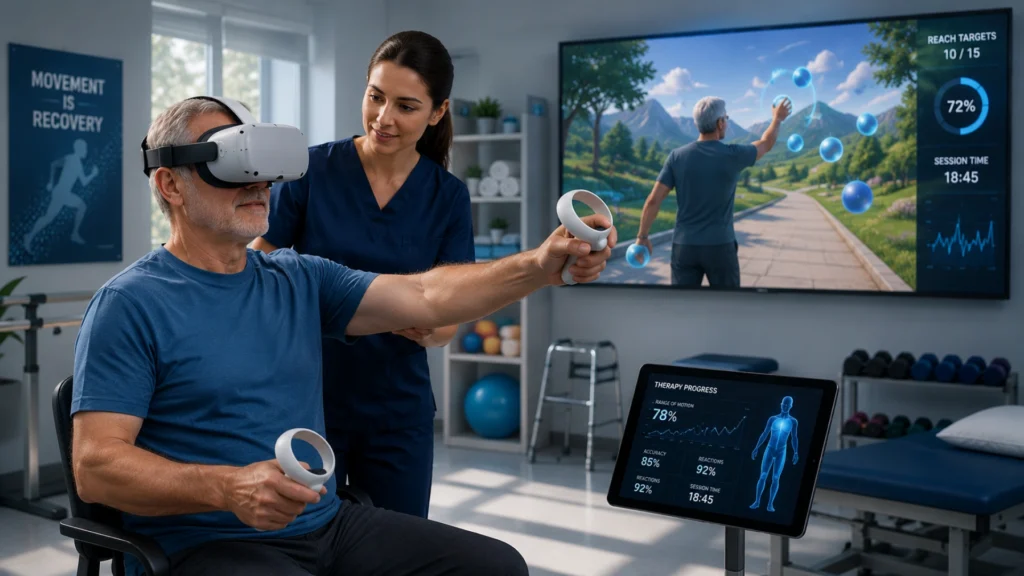
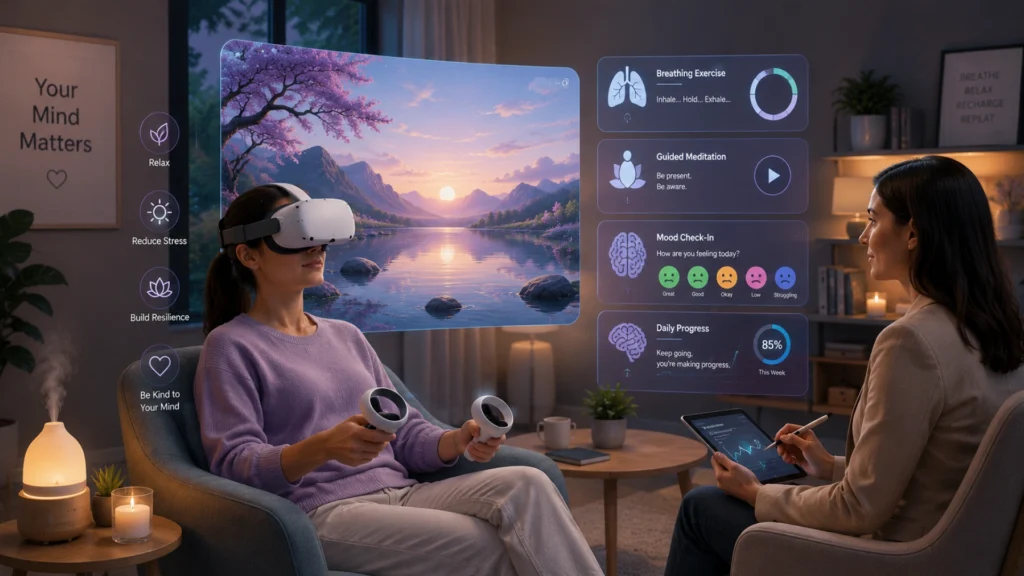
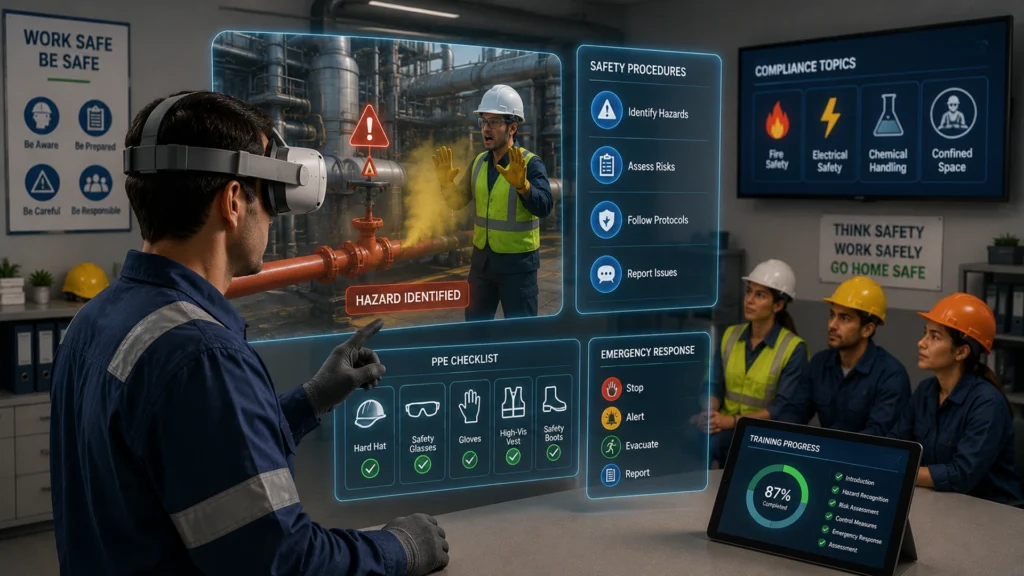
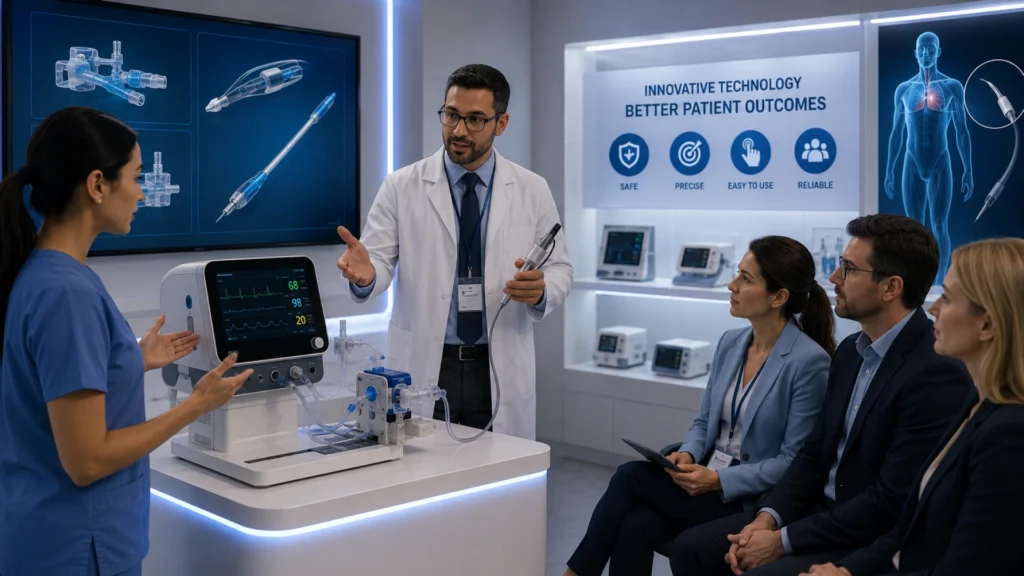









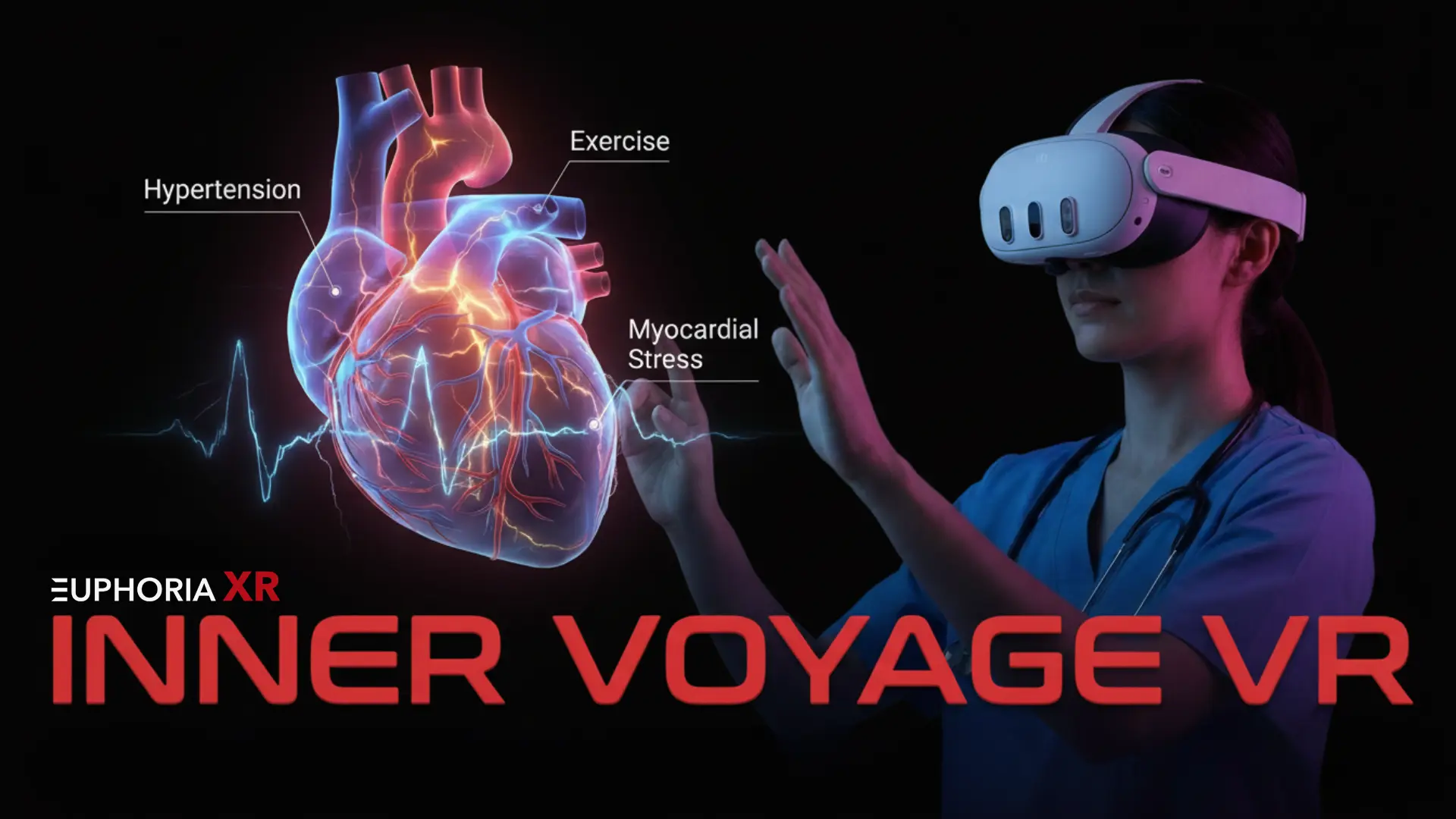







Improve the training of medical staff, patient education, therapy, surgical planning, and clinical collaboration with personalized AR VR healthcare solutions, transforming the healthcare landscape. In the healthcare sector, EuphoriaXR helps create immersive experiences, optimize learning, drive engagement, and achieve tangible results within an organization.
VR in healthcare provides complete immersive simulations for healthcare practitioners to practice procedures safely, patients to enjoy more apprehension-free therapy, and healthcare students to gain clinical confidence. It enhances Medical Simulation and Training, rehabilitation, and pain management without real-world risks.
AR in Healthcare is the technology that places virtual content into the real world, assisting practitioners to view anatomy, guide procedures, educate patients, and aid medical training. It brings precision in surgical procedures, collaboration, clinical decision-making, and helps patients understand better, and brings users back to the realities of the actual environment.
Supports students to learn from interactions and simulations in healthcare experiences.
Allows safe clinical practice without exposing patients to preventable errors.
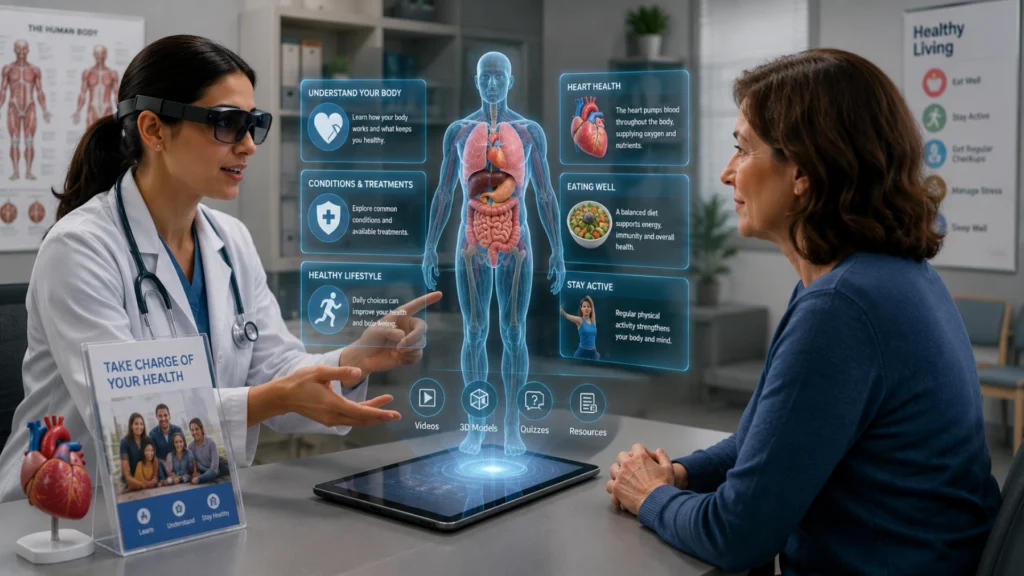
Describes complicated treatments in a simple, visual, interactive healthcare experience.
Keeps users actively involved with realistic and immersive medical scenarios.
Normalizes healthcare training for departments, campuses, teams, and locations.
Gains confidence with multiple repetitions in realistic healthcare virtual environments.
Challenges in healthcare become an immersive AR/VR experience through strategy, design, development, deployment, testing, and support.
We first establish your healthcare objectives, users, workflows, training requirements, technical constraints, and success measures, then design your best AR/VR solution.
We create medical scenarios and intuitive user journeys, interaction flows, visual structures, and immersive environments that reflect real healthcare use cases.
We build secure, scalable AR VR healthcare applications with realistic simulations, interactive features, device compatibility, analytics, and performance-focused functionality.
We deploy your AR/VR solution on the selected devices, do the tests, optimize them, maintain them, and help you with long-term technical support.
Effective interactive VR heart visualization for medical learners to teach the medical industry about the anatomy of the heart in a more immersive and realistic way.
An award-winning VR experience that educates healthcare professionals on rare disorders through highly realistic clinical scenarios, and interactive medical learning paths.
An immersive VR medical training setup lets healthcare professionals practice breast infection assessment with stronger clinical decisions, better diagnostic confidence and elevated patient care.
Medical training, surgical planning and planning, patient education, therapy, rehabilitation, anatomy learning, remote collaboration, healthcare simulations, and much more.
These are some of the most common use cases for creating medical simulations, such as AR anatomy visualization, VR therapy, surgical guidance, medical education, medical device demos, tours of hospitals, and even compliance training.
Yes, VR is being used by doctors for surgery planning, complex anatomy, surgical practice, and surgical confidence to get into real surgeries.
Healthcare AR uses 3D graphics and animation to show anatomy and instructions on real places, improving learning, diagnosis, treatment planning, and clinical direction.
VR is redefining medical education, mitigating learning risks, aiding rehabilitation, engaging patients, and creating more interactive and accessible complex healthcare education.
The uses of VR in medicine include safe environments for clinical practice, therapy, pain distraction, rehabilitation, anatomy learning, and emergency response training.
In the medical field, AR in hospitals can be leveraged to interact with digital information, anatomical models, training materials, and procedural instructions.
AR can be used to visualize anatomy, guide surgical planning, to train medical teams, to explain treatment to patients, and to enhance clinical collaboration.
Interactive 3D human organs, human body systems, and human medical structures are common medical applications of AR.
In a medical context, VR is simply the term for virtual reality, which is a simulated digital environment employed in medical training, patient treatment, therapy, or patient education.
AI with AR VR will enable future innovations such as AI-powered simulations, remote medical collaboration, digital twins, personalized rehabilitation, and smarter patient education experiences.
We are here to turn your ideas into reality
