Have you ever wished to build your decentralized application, but were too intimidated by all the technicalities?
You are not the only one.
Many individuals get hyped about Web3 building. It is exciting to think about creating your decentralized app, something safe, open, and thoroughly on the blockchain. However, once you begin to read about dApp development, it all of a sudden becomes… complex.
Terms such as smart contracts, Solidity, Truffle, Ganache, and MetaMask begin to cross the room. And the next thing you know, you get to close the tab with a thought,
Perhaps, this is over my head.
However, the thing is that you do not have to be a blockchain expert to start with dApp development. Indeed, even when it’s your first smart contract, you can create a live, working Ethereum dApp (such as a voting app) with proper guidance.
The tutorial is aimed at making the process easier.
One thing at a time. No jargon. No guesswork.
All you need is a simple guide that will take you from curious to confident about dApp development.
So, what are you waiting for to build your first decentralized app?
What is a dApp (Decentralized Application)?
Definition
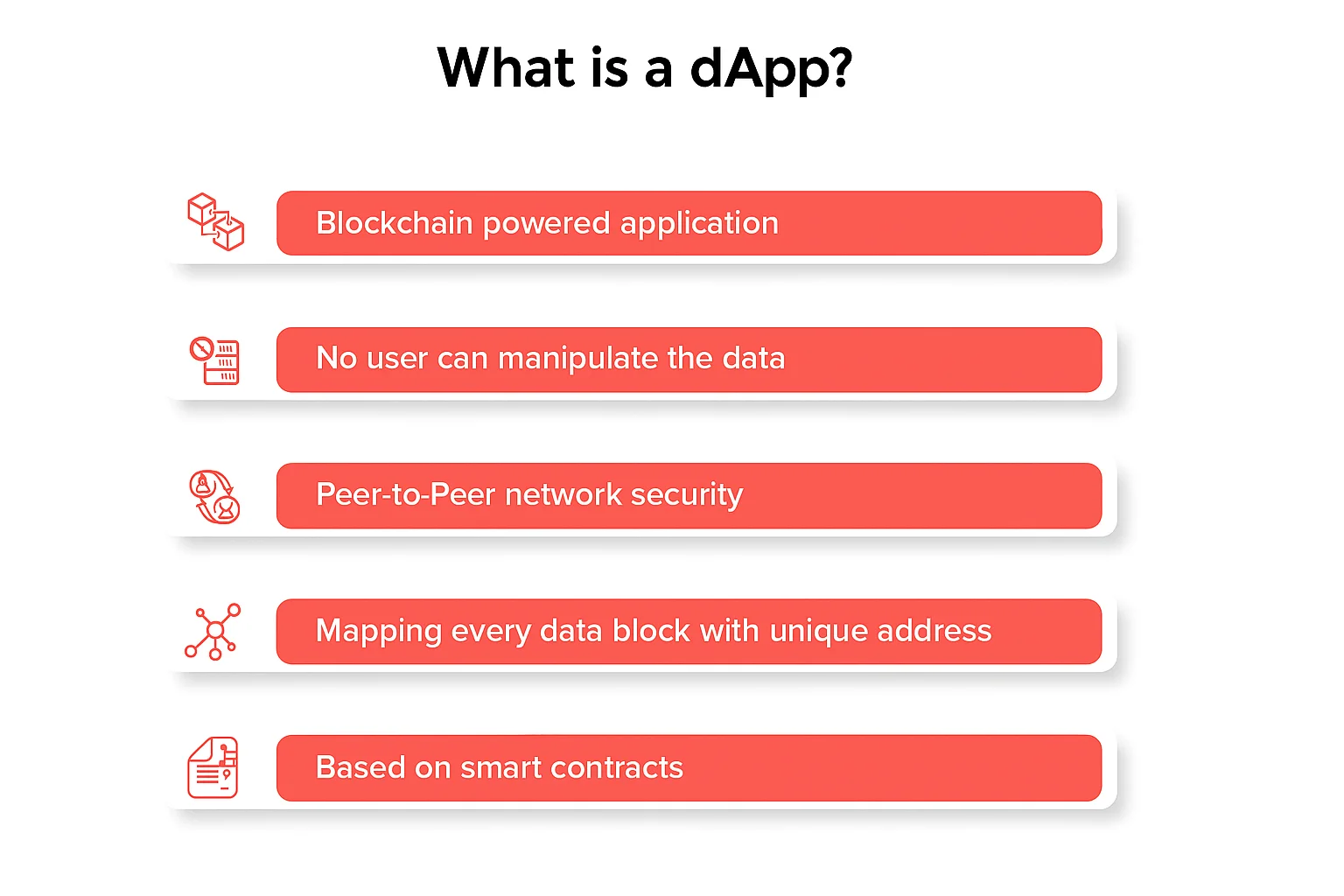
A decentralized application (dApp) is a computer application that executes on a blockchain, rather than a central server. This implies that it is not owned by any individual firm or individual. In its place, it is fueled by smart contracts, which are self-executing code stored on the blockchain.
It is like an ordinary app, except there is no intermediary, and your data is protected not by the privacy policy of the company but by mathematics.
DApps Vs Traditional Apps
Centralized servers carry traditional applications such as Facebook or Uber. If the server is killed…or the company decides to kill it…you are dead. Conversely, dApps use a peer-to-peer blockchain network; they are more dependable and resistant to censorship.
How dApps Work
The main element of any dApp is a smart contract. It is a fragment of code that determines the behaviour of the dApp. When it is deployed to a blockchain such as Ethereum, it cannot be modified. The interaction between the users and the contract is done through crypto wallets such as MetaMask.
The frontend (what users view) is plain like any other app- HTML, CSS, and JavaScript. The blockchain does the backend logic, however.
Core Components
Smart Contracts: Code that executes the logic on the chain
Frontend UI: The interface seen by the users
Wallet Integration: Enables users to connect their crypto wallet (e.g., MetaMask).
Blockchain Node: To write /read data to the blockchain
Optional APIs: To be used on-chain or for additional data
Related: https://sample.noumanmahmood.net/metaverse-vs-web-3-0-differences-similarities-features/
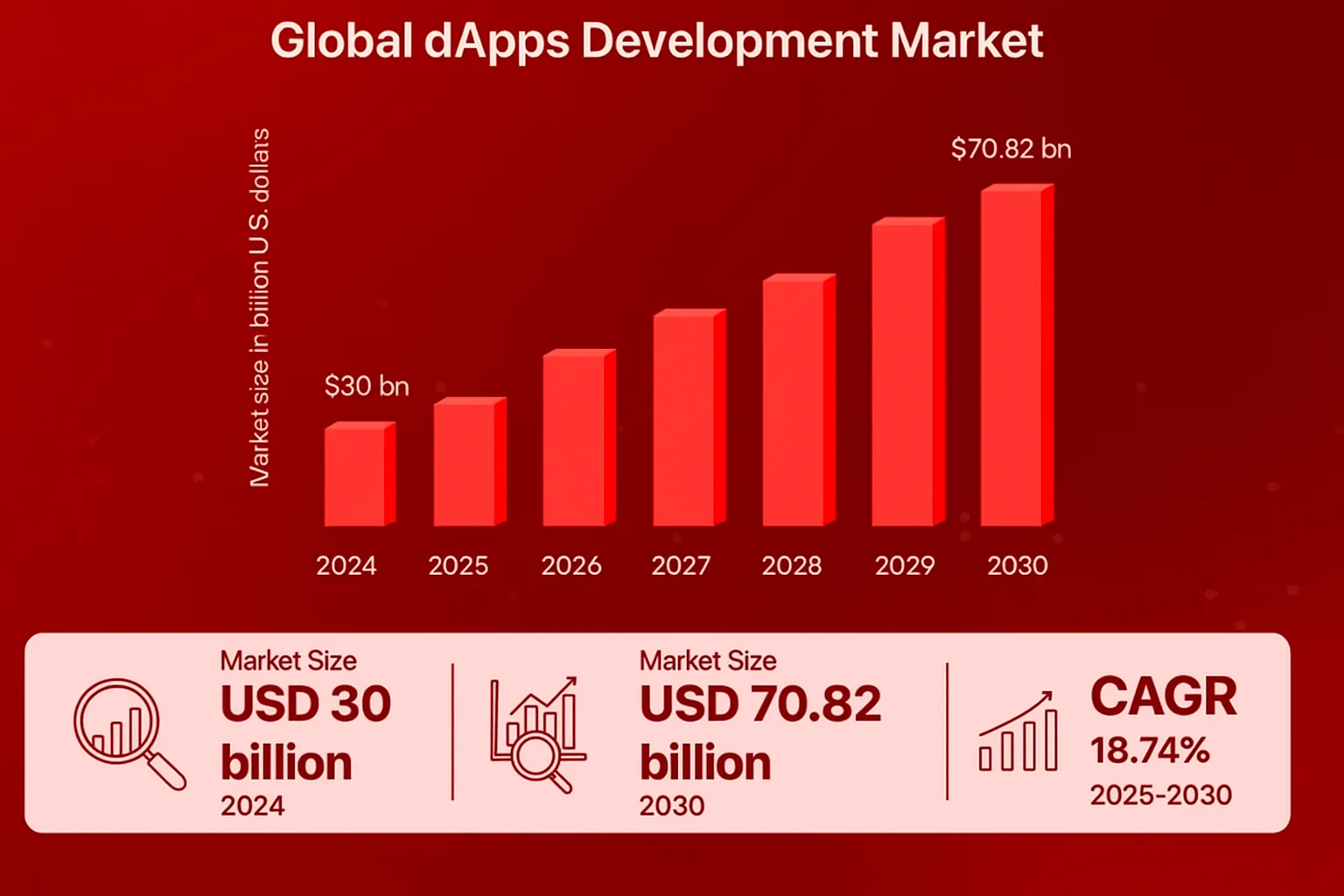
Why DApp Development Matters in 2025?
Benefits of Decentralization
Decentralized control: Users own all their data and assets
Access globally: dApps can be used or developed by anyone with access to the internet.
Security: No point of failure, no leak of data
Transparency: Every transaction can be openly verified
In a report by Gartner in 2024, it was depicted that decentralized systems can offer a 34 percent reduction in operational risk in comparison to centralized applications.
Use Cases
Finance (DeFi) – Bankless lending, trading, borrowing
Gaming – Play-to-earn and NFT-based economies
Supply Chain- Visibility in Goods Movement
Social Media: Social media are user-owned platforms, as opposed to corporate-owned platforms.
Identity & Voting – Tamper-evident verification
Key Industry Trends
Multi-network access dApps
Usage of Layer 2 (Polygon, Arbitrum) to get faster and cheaper transactions
Integration of AI + dApp to have smarter decentralized logic
Bank, insurer, and logistics provider adoption of enterprise
Utility tokens, subscriptions, and tokenized rewards dApp monetizations
Key Features That Set dApps Apart
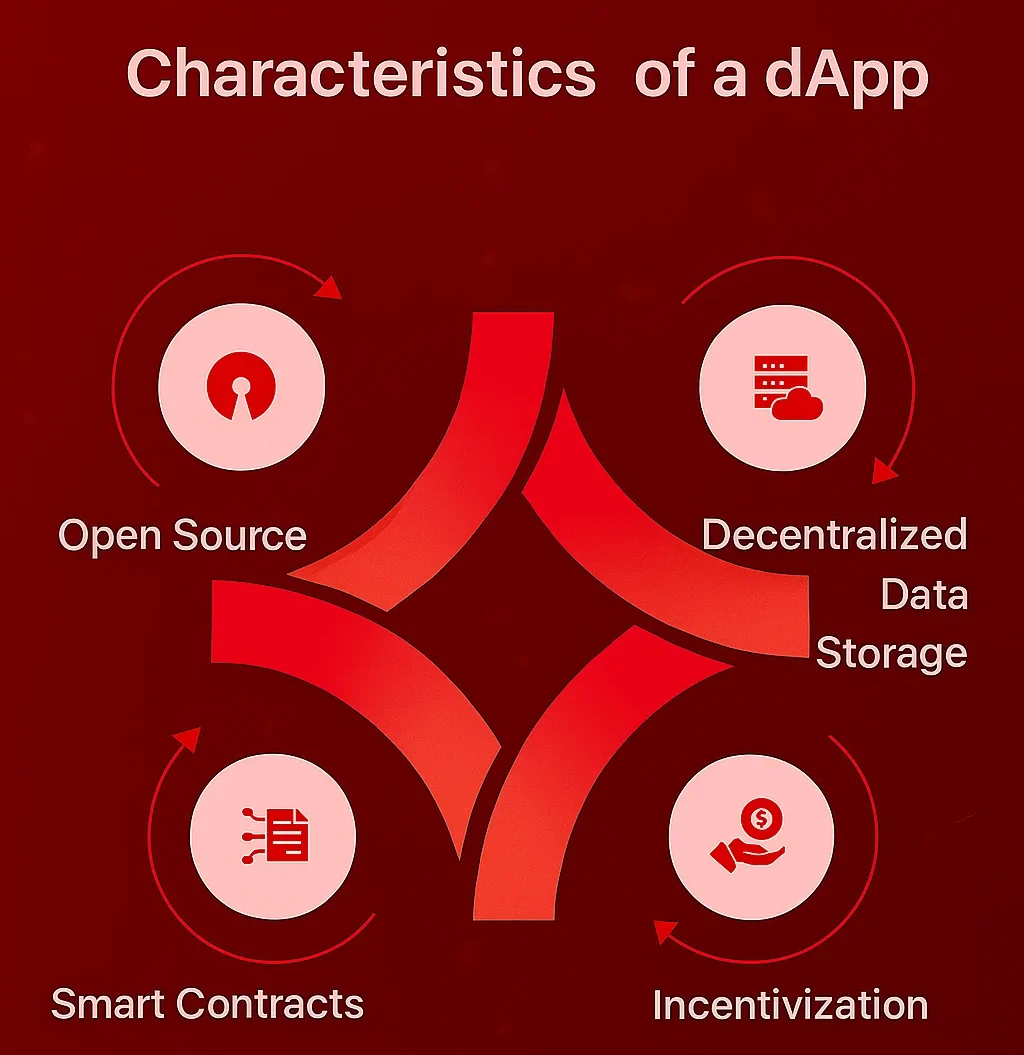
Decentralization
The app is not owned or controlled by a single authority. All is operated on the blockchain on numerous nodes.
Censorship Resistance
A dApp can not be brought down by Governments or corporations as it is not connected to one host or server.
Open Source
The majority of dApps post their code to allow anyone to check how it functions. This develops trust and contributes to the community.
Token Incentives
dApps may compensate users with tokens just to participate, which may be real or useful within the app.
Trustless Architecture
Users do not have to trust the owner of the app. They simply believe in the code, and the code runs accordingly.
Core Components of a dApp
There are some building blocks to building successful dApps. Regardless of whether you are building a voting application, a DeFi project, or an NFT marketplace, all decentralized applications have the following common components:
Smart Contracts
They are automated programs that are stored on the blockchain. They do the main brainwork, such as determining who is eligible to vote, transfer tokens, or use a feature, without involving a third party.
Frontend/UI
This is what the user views and operates. The frontend is constructed with common development tools such as HTML, CSS, and JavaScript and communicates with the blockchain via Web3 libraries, such as web3.js or ethers.js.
Backend Infrastructure
Instead of going through centralized servers, as is the case with conventional apps, dApps frequently bypass them. Nevertheless, other hybrid configurations employ backends to support off-chain operations such as analytics, messaging, or Storage of large files.
Data Storage
Important information (such as ownership or transaction history) is kept on-chain. With bigger data, such as images or documents, it is common to store them off-chain, using IPFS or Arweave.
Wallet Integration
To use the dApp (to approve transactions, sign messages, or just hold tokens), users must have wallets (such as MetaMask or WalletConnect). It is the entry point to the blockchain.
Blueprint: How to Develop a dApp?
The world of dApp development may seem intimidating at first; however, when you chop the process down into small, logical chunks, it is quite possible. Are you developing a DeFi application, NFT marketplace, or a decentralized voting system? In any case, the following steps will act as a clear guide on how to turn your idea into a launched product.
Define Purpose
All great dApps begin with an obvious problem that they address.
Ask yourself:
Which gap in the market am I filling?
Will blockchain enhance this process?
What are my users, and what are their needs?
It is important to define your purpose early to prevent wasting development and to make sure your dApp will be useful and not another hype.
Choose a Blockchain Platform
The thing is, not every blockchain is similar. Select the one which suits you best:
Ethereum: The most popular, well-supported, and expensive one.
Solana: High speed and cheap.
Polygon: scalable and compatible with Ethereum;
Binance Smart Chain: cheap and fast, increasing DeFi usage
Polkadot, Starknet, Avalanche, etc., to more specific applications
Tip: Look at speed, cost, developer tools, and size of the ecosystem to pick your platform.
Select Tech Stack
This is your development toolkit. A classic dApp technology stack is:
Smart Contract Language: Solidity (Ethereum), Rust (Solana), etc.
Framework: Truffle, Hardhat, or Anchor
Frontend: Reactjs or Next.js or Vue.js.
Libraries Web3.js, Ethers.js
Storage: IPFS, Arweave (off-chain data)
The correct stack will allow your workflow to be quicker, your dApp safer, and your code more sustainable.
Design Architecture
Before you start writing code, it is important to plan how your components will interact:
What about the user interaction with smart contracts?
What goes on-chain vs off-chain?
What about wallet authentication?
Do you require APIs or oracles?
Make diagrams or wireframes. Consider this step as outlining the blueprint to building a house- you want it firm before you construct.
Develop Smart Contracts
Here is the core of your dApp – the on-chain business logic.
When developing contracts, use a testnet such as Goerli or Sepolia to deploy the contracts without putting them on the mainnet. Do make sure to:
Use the best practices of Solidity or Rust
Make contracts upgradable, when necessary, modular
Broadcast front-end events
Evade security issues (reentrancy, overflow, and so on)
Fact: In 2022, more than 3.8 billion was lost to DeFi exploits. Secure contracts are not negotiable. (Source: Chainalysis)
Build Frontend
Your frontend must be neat, self-explanatory, and must be neatly merged with blockchain functionalities.
Significant frontend tasks:
Show on-chain data (user balances, votes, NFTs etc.)
Called smart contract functions through interaction with a wallet
Manage wallet connection (MetaMask, WalletConnect)
Display loading indicators and success messages
To make the integration more comfortable, use libraries such as Ethers.js or Wagmi.
Testing
dApp development can not be tested optionally; it’s essential.
Unit Tests: In the case of smart contracts (Truffle, Hardhat, Foundry)
Integration Tests: Contracts + frontend are integrated
User Acceptance Testing (UAT): Confirm flow with actual users
Security Audits: Manual review or third-party review before going live should be considered
Pro tip: Testing first can prevent early mistakes in development.
Launch
Let investor relations go live!
Distribute your smart contracts to the mainnet
Deploy your frontend using services such as Vercel, Netlify, or IPFS
Hook up your domain
Deploy your dApp to users, testers, and the community
Do not forget to track user activity and collect live feedback post-launch.
Maintenance
Although dApps are decentralized, that does not make them set-it-and-forget-it.
Once launched, keep on:
Squash bugs and patch front-end problems
Gas optimization of smart contracts
Launch new functions and roadmap
Keep your community in active communication
SQL security monitoring
It is your full guide to be able to deploy your first decentralized application without fear.
Regardless of how you plan to build (or have built): to have fun, to make money, to make a difference–this is where dApp development starts.
Solana for dApp Development
Solana has already gained momentum as one of the most appealing platforms to develop dApps on, particularly amongst the developers focused on speed, scale, and cost. Solana might be worth your attention in case you want to create a high-performance application that could feel nearly instant to your users.
Speed
Solana is capable of achieving 65,000 or more transactions per second (TPS) with sub-second finality, making it a great fit to power real-time applications, such as games, decentralized finance (DeFi), and marketplaces.
Scalability
Solana does not use sharding or Layer 2s, instead wanting to thank its peculiar architecture. It scales natively, Linear-scale: thousands of nodes.
Low Fees
Its price-per-transaction is ultra-low, at an average of $0.00025 per transaction, regardless of whether the apps are experiencing high traffic or not.
Developer Tools
Solana allows development in Rust, C, and C++, and frameworks such as Anchor, which make it easier to develop smart contracts.
Open Ecosystem
Solana is open-source, and the community and ecosystem are expanding. It is home to hundreds of active dApps and projects, such as DeFi or NFTs.
Solana dApp Features
Solana employs a stack of advanced technologies that make it stand out from the rest of the blockchains:
Turbine
It is a block propagation protocol that divides data into smaller packets to facilitate quicker sharing among nodes.
Pipelining
Sorting out the incoming data efficiently with the use of several stages keeps the network high-speed.
Cloudbreak
A read/write optimized, horizontally scalable storage engine.
Gulfstream
The transaction forwarding protocol Solana is a mempool-less design that enables validators to perform transactions in advance.
Tower BFT
An original, Byzantine Fault Tolerance (BFT)-consensus mechanism, which is speed and efficiency-oriented.
High Throughput
Solana has consistently provided high throughput, although it does not compromise on decentralization.
Low Latency
Confirmation of transactions occurs in milliseconds, not minutes.
Low Fees
With cheap prices, it is ideal for microtransactions and regular use.
How to Build a Solana dApp
Are you ready to develop your dApp on Solana? The simple way is this:
Install Rust, Solana CLI, and Yarn
Solana smart contracts (known as programs) are Rust programs, which means you will need to install the toolchain first:

Install Node.js & Anchor
Anchor is a framework that makes it simple to develop smart contracts in Rust.

Set Up Project
Create a new Anchor project with:

Code with Rust & Anchor
Implement your Solana program logic in Rust in the programs directory. Anchor has a nicer syntax and integrated testing.
Build React App
Write your frontend in React (or any JS framework) and interact with the Solana program using either the client from Anchor or @solana/web3.js.
Install Wallet Adapter
Integrate the Solana Wallet Adapter to enable Phantom, Solflare, and Glow wallet integrations.

Launch the dApp
Test your app on Devnet
Assemble the smart contract with the anchor deploy
When you are ready, move to the Mainnet
Track your dApp using Solana Explorer and RPC APIs
How to Build an Ethereum dApp?
Ethereum is the platform of choice of many developers beginning to work on dApp development due to its rich ecosystem, robust developer tooling, and battle-tested smart contracts.
In this tutorial, we are going to create your decentralized voting application with Truffle, Ganache, and MetaMask. So, let us get started with some easy steps.
Initialize Truffle Project
First, initialize Truffle and create your project folder:

This gives the simple framework of your smart contracts and migration scripts.
Create Smart Contract (Election.sol)
Within the /contracts folder, declare a new file: Election.sol:
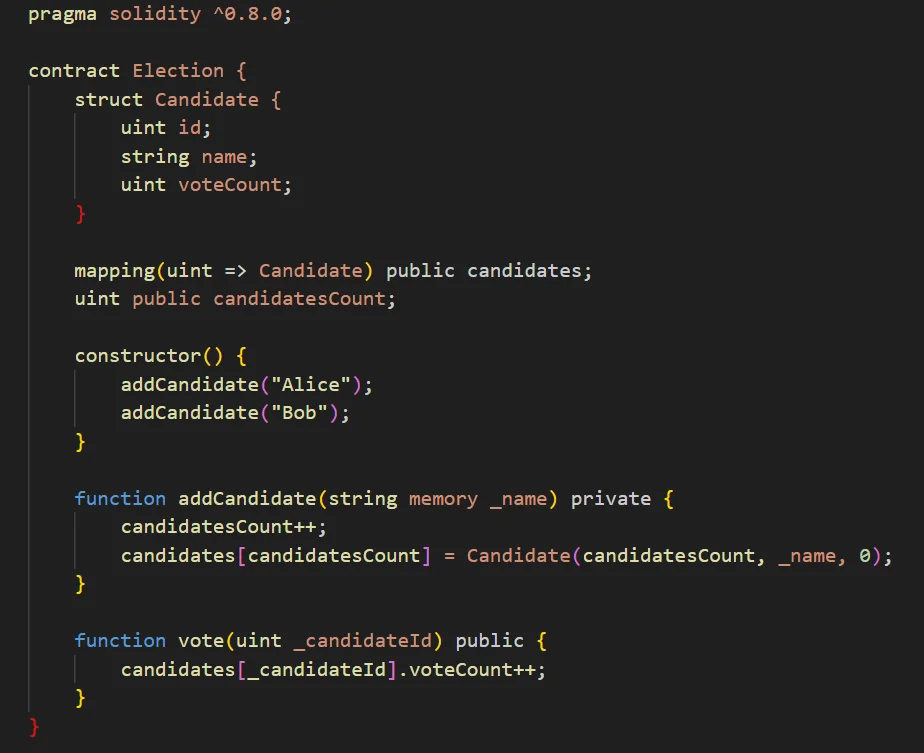
It deploys a simple election logic on-chain in Solidity.
Deploy to Ganache
Ganache is a local Ethereum blockchain that you can utilize in testing.
Open Ganache Desktop
Make a file 2_deploy_contracts.js under /migrations:

Then run:

At this point, your smart contract is deployed on your local blockchain.
Write Smart Contract Tests
Truffle relies on Mocha and Chai to write tests. Example test:
Run your tests with:
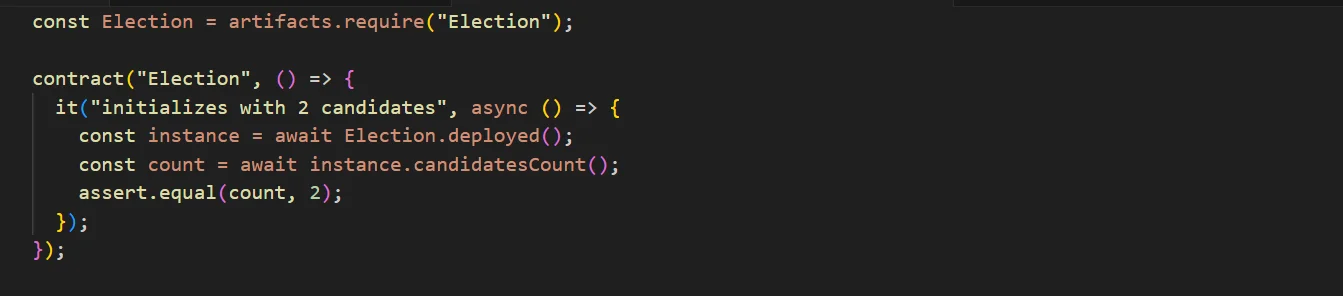
The best dApp development practice involves testing the reliability of the contract.
Build Frontend (HTML + JavaScript)
The simplest HTML and linked with Web3.js, can be used to read data stored on the blockchain:


Iterate over candidates and present them in your UI.
Connect MetaMask
Add MetaMask to your browser and select the local Ganache network. You’ll need:
The personal key of a Ganache account
The personalized RPC (normally http://127.0.0.1:7545)
To accept MetaMask pop-up connections and transactions
This enables users to be able to sign transactions using the browser.
Trigger Events
Add an event on the smart contract:

When a vote occurs, emit it. In your frontend, then:

Events cause your dApp to be interactive and reactive without requiring manual refreshes.
Complete dApp Integration
Now, it is all interrelated:
The UI allows the user to vote.
The transaction is done through MetaMask.
The voting result is recorded in the blockchain.
This is because the UI is updated in real-time through event listeners.
You have created a full Ethereum dApp application from scratch.
Solana vs Ethereum for dApps
The selection of the blockchain is among the most significant dApp development choices. Solana and Ethereum are the two giants, so how about comparing them in major categories:
Ethereum is perfect in stability and community. Solana gives victory in terms of performance and cost. The option you take relies on the demands of your app.
Top Platforms for dApp Development
There are numerous choices nowadays, so these are the top blockchain platforms to deploy your dApp in 2025:
Ethereum
The most popular for DeFi and smart contracts. It has huge developer support and tooling.
Binance Smart Chain
EVM-compatible, cheap, and suited to quickly deploy Ethereum-compatible dApps.
Solana
Most suitable when the app is speed-oriented. Ideal to play games, microtransactions, and mobile decentralized apps.
Cardano
Scholar-informed and well supported academically. Considers formal verification and scalability.
TRON
It is quick and cheap, alongside being powerful in content and entertainment-based applications.
EOS
It is famous due to zero-fee transactions and speed.
Klaytn
Kakao has developed an enterprise-level blockchain. Asian popularity, good commercial applications.
Polkadot
Allows dApps to be developed across chains with the help of parachains. Interoperability is great.
Starknet
Ethereum Layer 2 ZK-Rollup. Great scalability and security, suitable for intricate apps.
Tip: Select your platform depending on how fast, how expensive, the ecosystem, and your favorite programming language.
Smart Contracts in dApp Development
The main brain of any dApp is smart contracts. They are the ones that run logic and user interactions, and contain important data.
Importance
They execute transactions and impose rules without intermediaries. They run as written once they are deployed.
Languages
Solidity: The most popular (Ethereum, BSC, Polygon)
Rust: Solana and NEAR
Cairo: In the case of Starknet
Move: Aptos, Sui
Security
Validate input and limit permission.
Prevent reentrancy and overflow bugs.
Apply a tool such as Slither, MythX, or Certora.
At all times, test using unit + integration tests.
Apply a third-party audit before the mainnet.
Optimization
Make contracts with upgradable modules
Reduce gas consumption (loop optimization, storage write optimization)
Dispatch events to increase frontend interaction
Take tested code from libraries such as OpenZeppelin
Security Measures for dApps
The key to developing a successful dApp is security. As decentralized apps involve millions of dollars being transferred around, any minor breach can result in significant losses.
The best methods to create safe, reliable dApps are the following:
Secure Coding
Write clean code, smart contracts. Employ design patterns that have been tested. Unneeded complexity is a bad idea- simple code is simpler to secure.
Smart Contract Audits
Audits, whether in-house or through a third-party service, should always be performed before going to the mainnet. Audits detect logic errors, vulnerabilities to attacks, and gas waste.
Stat: CertiK reports that in 2023, more than 70 percent of significant DeFi hacks might have been averted with careful pre-deployment audits.
Testing
Test all of it – smart contracts, UI flows, wallet connection. Make automated test suites with Truffle, Hardhat, or Foundry. In addition, you should have integration tests that emulate the real-world user interactions.
Bug Bounties
Start a public or private bug bounty with the help of such platforms as Immunefi or Hacken. Reward ethical hackers to identify the bugs before the bad actors.
Monetization Strategies for dApps
The dApp deserving of great attention must have a great business model. The following are some sustainable dApp monetization strategies that you can inculcate in your dApp development roadmap:
Token Launch
Launch a native token that fuels your ecosystem. May be accessed, governed, rewarded, or staked.
Transaction Fees
Put a low fee on every action, trade, post, upgrade, mint, or swap.
Premium Features
Provide premium tools, analytics, or VIP access through a paywall.
Subscriptions
Charge monthly or annually to use your service (e.g., portfolio tracking or special dashboards).
Ads
Implement decentralized advertisement networks or collaborate with sponsors to get placement spots; content-based dApps are best suited here.
Donations
Enable users to give donations to the app itself or the cause that it promotes, typical of social impact or open-source dApps.
NFTs
Reward in-app or provide loyalty or community badges by offering limited edition NFTs.
Referrals
Give users who refer new users some tokens or credits.
Pro Tip: Combine models, such as token utility + subscriptions, to have a stable long-term revenue.
Real-World dApps
Need some inspiration for dApp development? These are the successful decentralized apps that demonstrate what can be done:
These projects outline the versatility of dApp models, be it finance, entertainment, or infrastructure.
Cost Analysis of dApp Development – Understanding the Investment
Among the most frequently asked questions, before the beginning of any dApp development project, are:
What will it cost?
It depends on what you are building, the complexity of the same, and the people who are involved in the building. We should simplify it to help you plan efficiently and be ready without surprises.
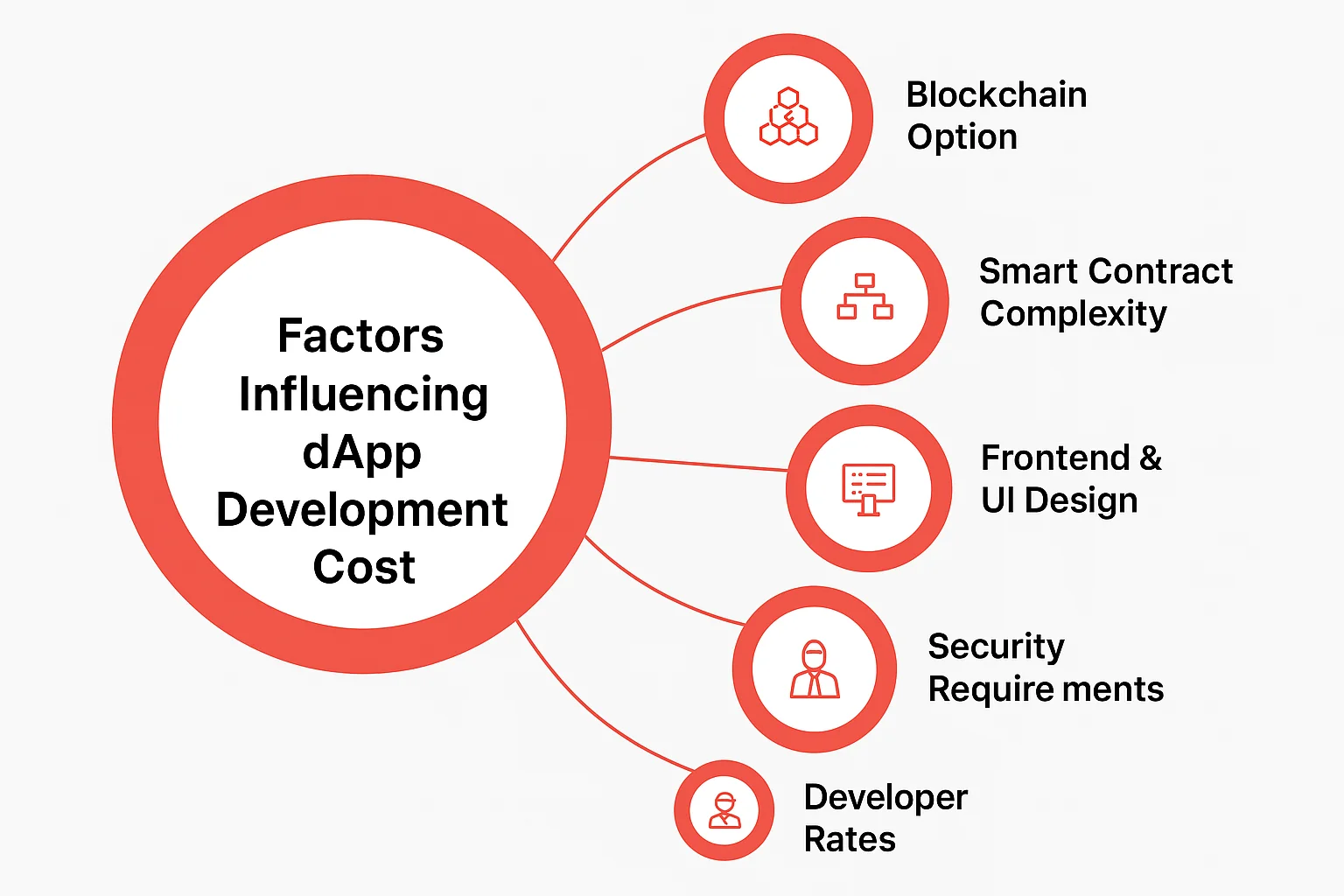
1. Factors Influencing Cost
The total cost of a decentralized application development is influenced by a few variables:
Category of dApp: A basic voting application is much cheaper than a DeFi lending protocol or an NFT marketplace.
Blockchain Option: When using Ethereum, transactions are more expensive than using Solana, Polygon, or BSC because of gas fees.
Smart Contract Complexity: The more complex the logic is, the more time will be required to develop it, and thus the more expensive it will be.
Frontend & UI Design: An efficient, responsive interface needs additional design and development effort.
Security Requirements: Third-party audit or additional security layers will increase the budget substantially.
Developer Rates: whether in-house, freelance, or agency, developers charge varying rates depending on skill and location.
2. Cost Estimates by dApp Type
The approximate cost of various types of dApps would be something like this:
Note: These are rough estimates. Pricing will be determined by features, audits, integrations, and launch schedule.
3. Cost-Saving Strategies
On a more limited budget, it is still possible to deploy a working dApp by being resourceful:
Testnets would help in the development phase to prevent high costs.
Select Layer 2 scaling solutions, such as Polygon or Arbitrum, to reduce deployment and transaction fees.
Use smart contract modules with Open-Source Libraries like OpenZeppelin.
Start small and develop a minimum viable product (MVP) and add features depending on the feedback of the users.
Outsource remote workers or freelancers in areas where the rate is competitive, but ensure you check their experience and previous portfolio.
On the one hand, having an idea of the cost side of the dApp development allows you not to overpay and develop something scalable, secure, and according to the budget.
Business Side of dApp Development
The dApp development is not only about code. A business strategy will give you the real users and sustainability in case you need real growth.
Business Model
And how will your dApp earn money? Select models such as:
Transaction fees
Subscriptions
Premium access
Token utility
Marketplace commissions
It is important to make your revenue model match the purpose and audience of the app.
Unique Selling Proposition(USP)
Why is your dApp unique? Is it quicker? Cheaper? More secure? That is your USP, what will make users use your dApp and not that of another person.
Legal Prep
The answer is yes, even in Web3, laws do matter. In your jurisdiction, and use case:
Record your business entity
Familiarise yourself with data privacy legislation
Token regulations (ICO in particular)
Tip: Grab a Web3-savvy lawyer on board before going live.
Fundraising
Options include:
Be clean on your pitch deck and roadmap to raise money.
Community Building
Your users become your best marketers. Utilise such as:
A connected community creates confidence and drives growth.
Deployment & Maintenance of dApps
After your dApp is complete and tested on a testnet, it is time to launch on the mainnet. This is the point at which your application is deployed to the real blockchain, and now it is available to real users and real assets. Smart contracts, wallet connections, and frontend integrations are some of the most expensive mistakes to catch before deploying.
Once it has been launched, regular updates are important. Your frontend, off-chain logic, and user experience can and should be updated over time, although smart contracts may be immutable. You will probably introduce a new feature, squash interface-related bugs, and profile the performance as per user usage.
Another important aspect of maintaining a dApp is risk management. Decentralized apps may break down, too, even in cases of unexpected smart contract bugs, wallet errors, or network overload. Being emergency-ready, by having the right monitoring tools and upgrade/roll-out plans, as well as backup infrastructure, will keep your app safe and sound.
Success & Scaling of dApps
The concept of success in dApp development begins with definite KPIs (Key Performance Indicators). These could be active user count, volume of transactions, wallet integrations, or token activity. Measuring these regularly will give you an idea of what is performing and what requires some attention.
That is where the actual growth occurs, in iteration. dApps never launch flawlessly. Gathering feedback from early users and making changes to your design, logic, or featureset based on real-world usage is a core part of remaining relevant and competitive in the Web3 space.
Next is the scaling of your dApp. Your user base will soon require you to consider integrating Layer 2 networks to offer quicker and more affordable transactions, different chains to interact with broader audiences, or even grow your team to manage development, customer support, and community interactions. Growth is not only technical, but also strategic, and it needs to be constantly worked on, not only within the code.
Common Mistakes of dApp Development
Even the accomplished teams succumb to these traps. Avoid them:
Skipping Audits
Audits can appear to be a costly affair; however, losing user funds is considerably more costly.
Poor UX
Crypto users demand fantastic user experiences. Complex wallets, slow UIs, or unclear flows = user bounce.
Lack of Testing
It is not possible to simply fix bugs on the blockchain. Test in advance, not later.
Wrong Blockchain
It is not every chain that fits. Some are too slow, some are too costly, and some lack an actual community.
Ignoring Tokenomics
When you are creating a token, create it well. Inflation, incentives, and utility should be considered on the first day, or you will lose users as well as investors.
How EuphoriaXR Can Help?
At EuphoriaXR, we help deliver tangible decentralized application ideas through effective development processes for businesses, startups, and visionaries into the realm of Web3. Whether building on Ethereum, Solana, or devising a custom Layer 2, our full-scale team collaborates with you at every step of dApp development, from smart contracts all the way to frontend design and full-stack deployment.
End-to-end services from dApp strategy development, audit of smart contracts, secure wallet integrations, cross-chain functionalities, to maintenance once the project has launched are guaranteed. Irrespective of whether the novice is new to blockchain or looking to scale an old product on the same technology, EuphoriaXR assures your dApp’s performance, adoption, and ultimately long-term success.
Disadvantages of dApps
UX Complexity
Most dApps need wallet connections, manual approval of transactions, and unknown procedures. This introduces friction to first-time Web3 users, and the onboarding process is slower than with traditional apps.
Performance Limitations
The way blockchains process data is different from centralized servers. This tends to cause low speeds, low throughput, and high latency, particularly at times when the networks are busy.
Regulatory Concerns
In most jurisdictions, dApp development is in a legal gray area. Shifting international policies regarding tokens, data privacy, and monetary compliance can pose threats to developers and users.
Maintenance Challenges
Smart contracts cannot be updated easily after they have been deployed. This complicates bug fixes or feature additions and, in many cases, needs full contract migrations or upgradable proxy patterns.
Final Thoughts!
Cross-Chain Future
Cross-chain compatibility will be needed as users require greater freedom. The dApps of the future will be able to interact seamlessly with Ethereum, Solana, Layer 2s, and more.
Mass Adoption
Easier-to-use interfaces, quicker transactions, and enhanced education will assist in bringing blockchain to the people. It will take a few years until dApps are as common as mobile apps.
AI + Blockchain
AI will result in the improvement of dApps development, as it will make smart contracts smarter, personalize user experiences, and automate on-chain data-driven decision-making.
Decentralized Identity
Web3 will allow users to have complete custody over their digital identities. By using decentralized IDs, users may sign in safely without utilizing centralized databases or logins.
Modular Chains
The blockchains of the future will be modular, allowing developers to create more performant, lighter, and more customizable dApps by only enabling the components they want.
Frequently Asked Questions FAQs