TL;DR
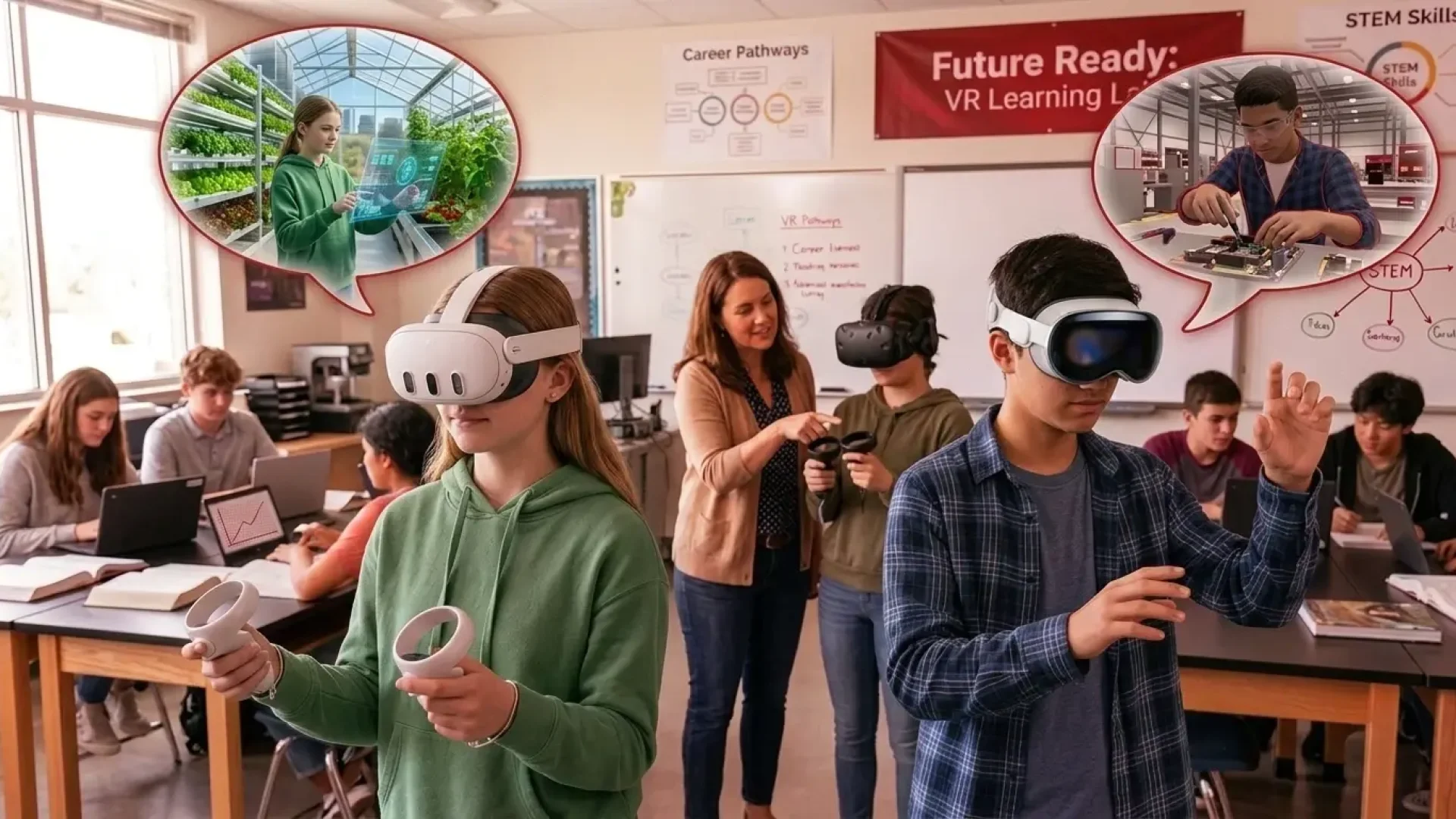
VR career exploration is a series of virtual simulations to help students in grades K-12 explore real-world jobs. Instead of students just reading about jobs, they can step into a virtual workspace, do hands-on operations, and get an understanding of what it is like to be involved in a different career.
It enhances K–12 learning through engaging, safe, and practical career learning and increased access. VR education solutions are a tool that can be used in schools to assist with CTE, STEM, career counseling, or early workforce readiness.
In layman’s terms, VR provides students with a wider range of career options, increases their confidence level, and enables them to make better decisions regarding their careers.
There is a big question that many students are asked.
What is your aim in life?
The issue is that most students have seen a small amount of the working world. They could be familiar with a doctor, teacher, engineer, or a businessman. However, they may not be aware of what takes place within a manufacturing plant, an aviation hangar, a hospital laboratory, a public safety training room, or a construction site.
Such a distinction can be confusing when it comes to career decisions.
VR career exploration starts to fill in those gaps. It provides students with an opportunity to experience careers before subject choice and/or entering college, a trade program, or a job path.
This is important because career learning is no longer an add-on. The 2019 high school graduation rate for student completion of at least one Career and Technical Education course was 85 percent, according to data from the National Center for Education Statistics (NCES). It demonstrates to what extent career learning is now integrated into contemporary education.
What Is VR Career Exploration?
VR career exploration allows students K–12 to virtually experience the work of various roles to gain insight into careers and future opportunities, plus explore the tasks they will encounter and the education and experiences required throughout a career.
Typically, VR career exploration software will contain career simulations, guided activities, student tracking, teacher dashboards, and features career pathway insights. The aim is to demonstrate careers, and not only. The objective is to get students to make links between those careers and their own interests and/or abilities.
Why does career exploration matter in K–12 Education?
Exploring a career is an important topic as students need to consider their future in the end. Early career exposures in K–12 education offer students the opportunities to think about what interests and strengths they have and what potential career paths may be available before making important college and career decisions.
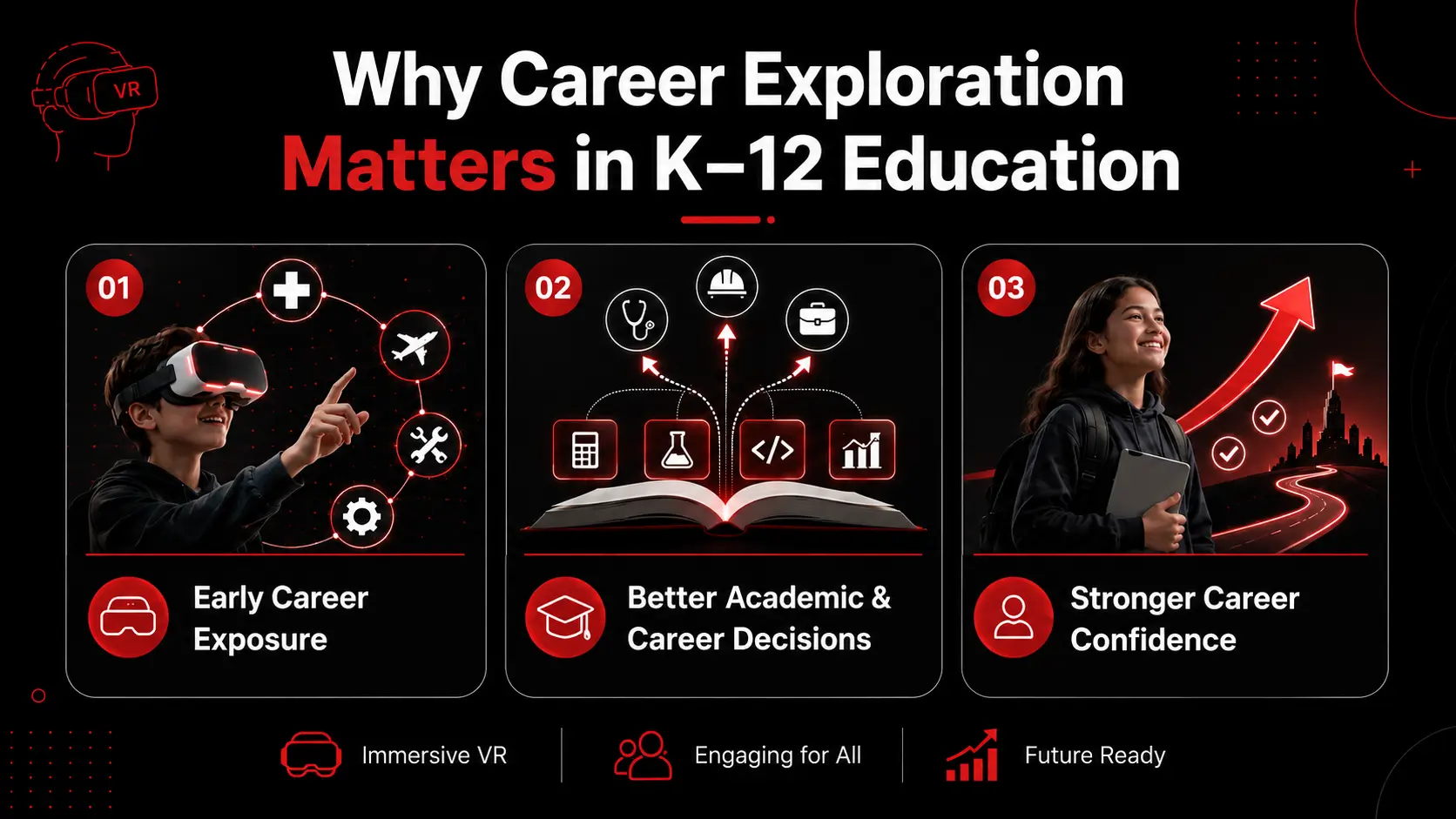
Early Career Exposure
By exposing students to early employment, they learn there are many more jobs available than the ones they are familiar with. VR career exploration is a new career exploration program that allows students to explore various career fields such as skilled trades, public safety, healthcare, aviation jobs, and engineering and manufacturing jobs in a realistic environment.
Better Academic and Career Decisions
If students know how their school subjects relate to actual work, they are able to make better decisions. Mathematics, for instance, seems to be more useful to the students if they can be shown how it is applied in engineering or construction. Science is more meaningful when applied to health care or the lab. This assists students in making informed decisions regarding future choices and career pathways in addition to course and CTE selections.
Stronger Career Confidence
The uncertainty surrounding tomorrow and the future for many students can be because they have not seen or experienced other careers’ activities. They can use VR to try things out themselves, see where they might fit in, and envision what their career might be. This helps them to develop confidence and to feel prepared to face the future.
The Role of VR Education Solutions in Schools
VR education solutions enable the school to impart career learning as practical experiences and enable visual learning and easier access to the learning. Within academic courses, students can have a more immersive learning experience, rather than just a lecture, video, or a career talk, which is closer to the real working environment.
Equitable Access to Career Experiences
Workplace visits, job shadowing, and industry tours may not be possible at all schools. VR provides access to career experiences in the classroom for more students. It can be particularly helpful if you are a rural school, have a limited budget, or have students who may not have direct exposure to some industries.
Integration With CTE and STEM Programs
VR is well suited to CTE and STEM studies, which are both hands-on. Students have an opportunity to explore careers in the technical field, practice basic, general skills, and understand how science, technology, engineering, and math are used in the real world for jobs.
Data-Driven Student Pathways
VR career exploration software can be used to engage and motivate students by recording what they explore, which careers are of interest to them, and where they spend more time. This information will help teachers and counselors have informed career discussions with students and suggest appropriate plans.
How Does K–12 Virtual Reality Training Build Real Skills?
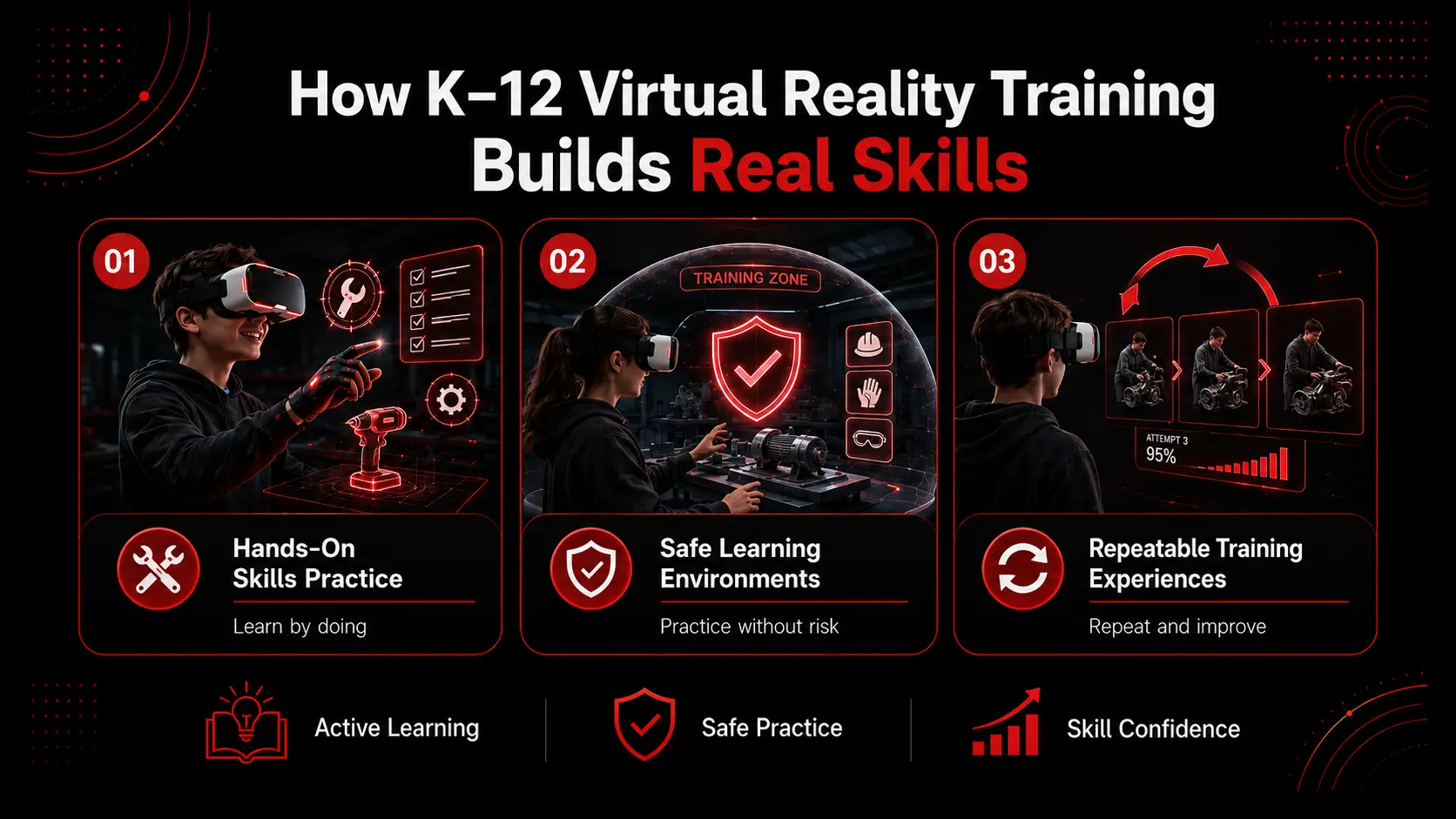
K–12 Virtual Reality Training enables learners to learn more about careers, but then apply these practices in a virtual context. It provides them with a safe place to practice, mimic, and learn simple work-related skills before real workplace conditions.
Hands-On Skills Practice
VR enables students to learn by doing. They can observe/inspect equipment, execute a step-by-step process of safety precautions, troubleshoot a problem at work, or perform a step-by-step walk-through of a task. This enables students to recall and learn more effectively through active learning.
Safe Learning Environments
There are jobs out there that contain risks, high-cost equipment, or confined areas. VR provides a seamless experience to understand without putting the students at risk. Errors are allowed; they try again and learn as they go, and do not have to face repercussions in the real world.
Repeatable Training Experiences
It will take more than one attempt for students to master a skill. With VR, practice can be re-done! A student has the opportunity to repeat the exercise until they make it clearer and more familiar.
How Does VR Keep K–12 Students Engaged?
VR maintains students’ attention in the K–12 classroom by engaging them in learning. Rather than listening, reading, or watching, the students immerse themselves in a virtual environment and participate in the lesson.
VR Career Exploration allows students to immerse themselves in career scenarios. They can be in any hospital room, construction site, factory floor, or public safety environment. Thus, students can have a better understanding of the lesson because they are able to see careers in the real world.
How Does VR Skills Training Improve Safety and Lower Costs?
VR Skills Training helps to provide professional development to enhance safety and reduce costs by reproducing professional-related skills in a virtual environment. Students can be exposed to technical, medical, industrial, and high-risk careers without experiencing dangerous or costly equipment or equipment that isn’t appropriate to the grade level.
K–12 Virtual Reality Training is one way students can get the basics before they start. Then they transition to a real tool and/or workplace, and they’re already familiar with their processes.
Key benefits include:
Reduces demand for expensive equipment: Schools don’t have to purchase laboratory pre-loads for all the careers.
Safer practice for high-risk positions: Students can study construction, health care, manufacturing, aviation, and emergency response without any risk.
Lower training mistakes: In VR, pupils may make errors and learn from them before performing the task with live equipment.
More scalable learning: Many students in a variety of classes and grade levels can use the same VR education solutions.
More preparation before practical training: Students are more confident and have a basic understanding when entering physical labs and workshops.
Supporting Instructors, Not Replacing Them
VR career exploration is intended to support teachers, school counselors, and CTE instructors. It is not a substitute for them. VR provides students with a real-life experience, and educators serve to lead the way, explain the meaning, and make it relevant to real career pathways.
Teacher-Led VR Learning
VR education solutions help teachers make their lessons more practical. They can introduce the career before the session, offer to support students during the session, and follow up to facilitate reflection afterwards.
Counselor-Guided Career Planning
VR career exploration software can be used for counselors to gain greater insight into what interests students. Once students learn about career opportunities through VR, counselors can assist students with selecting the appropriate course, CTE program, career, or future path.
Personalized Student Pathways
K–12 virtual reality training empowers schools to determine which students are interested in and where their talents are best suited. This enhances career guidance from a personal rather than generic perspective.
VR Training Builds Hope for Students’ Futures
VR offers opportunities to students to experience career pathways they may not have been aware of. Seeing a virtual career makes students more likely to envision a career in that field.
Exposure to New Career Options
VR career exploration provides students with an opportunity to explore a variety of careers in the healthcare, aviation, cybersecurity, robotics, construction, public safety, logistics, skilled trades, and advanced manufacturing fields.
Clearer Education-to-Career Pathways
VR demonstrates the relevance of the lessons in school to real-world jobs. Students will be able to see the connection between the postsecondary options that courses, certificates, CTE programs, college degrees, or apprenticeships can lead to.
Stronger Future Readiness
VR develops confidence, problem-solving, decision-making, and know-how about practice. Skills that help students to be better prepared for life after school.
Benefits of VR Career Exploration in K–12 Education
VR Career Exploration learns about careers in an active, safe, and accessible way for students.
Key benefits include:
Better career awareness: Students are exposed to different career opportunities than what they are currently aware of.
Higher student engagement: Students learn through doing, rather than listening or reading.
Safe skills practice: Students have the opportunity to learn about career tasks without being at real-world risk.
Stronger career confidence: Pupils are more assured in their thinking about the future.
Improved CTE and STEM assistance: The school can relate the classroom subjects to actual career paths.
More equal access: Students gain the opportunity to work in an environment that may be difficult to go and experience in person.
Improved career guidance: Pathway decisions can be made more effective with students’ activity data.
How Can Schools Implement VR Career Exploration Software?
Schools first should have a clear objective, select appropriate simulations, train staff, and monitor student results. When VR is an integrated component of a career readiness pathway, it will be engaging and effective. So, VR will be engaging and effective when integrated into a planned career readiness pathway, rather than a one-off classroom lesson.
Define Career Readiness Goals
Each school must determine if it wishes to provide career exploration, CTE, STEM, career counseling, career readiness, or skills training.
Choose Relevant Career Simulations
These simulations should be in line with student interests, grade level, school programs, and local workforce needs. Examples of fields with jobs that are in demand include healthcare, construction, aviation, manufacturing, public safety, and technology.
Train Teachers and Counselors
Staff should be familiar with the software, be able to lead students, manage sessions, and link VR-based activities with learning targets.
Track Student Engagement and Outcomes
Schools should keep track of completed simulations, student interests, feedback, confidence, and pathway interests in the CTE pathway to improve the program over time.
Key Takeaways
VR career exploration helps students see more career options: It provides learners with the opportunity to work in virtual environments that may be unavailable in the real world.
VR education solutions get students more active in learning: Students do not simply listen and/or watch. They investigate, engage, and exercise.
K–12 Virtual Reality Training complements real skill building: Learners have ample opportunities to practice activities, practice errors safely, and repeat the tasks until the activities have been grasped.
VR assists teachers/counselors: It provides educators with enhanced resources to facilitate career discussions and to match students with appropriate pathways.
VR career exploration software is assisting in improving career readiness: Schools are able to monitor student interests, foster CTE and STEM offerings, and assist in student academic and career choices.
Final Thoughts
VR career exploration is an educational program that improves K–12 career exploration and skill building and provides a bridge between classroom learning and a real path to the future. VR education solutions and VR career exploration software can remodel professional readiness for all freshmen into a more engaging, secure, accessible, and practical experience for students.
Frequently Asked Questions (FAQs)